【特别声明】本文旨在进行英语学习方法的交流与教学研究。所涉及《新概念英语》原文内容版权归原作者L.G. Alexander及出版方外语教学与研究出版社所有。本文内容为基于正版教材的学习笔记和教学参考,仅供学习交流之用。若喜欢本教材,请务必购买正版实体书。
一、课文导读
本课学习目标
今天我们要学习的是新概念英语第二册的第四课,标题是 "An exciting trip"(激动人心的旅行)。
这是一封来自弟弟Tim的信,告诉我们他在澳大利亚的精彩经历。Tim在澳洲待了六个月,去过很多地方,买了车,还计划继续旅行。作者最后感叹:弟弟从未出过国,所以觉得这次旅行非常 exciting。
本课的重点知识点包括:
文化小知识:澳大利亚地名
课文中提到了几个澳大利亚地名:
这些地名说明Tim的旅行是横跨澳大利亚的,从南到北,从东到西,所以作者说这是一次"激动人心的旅行"。
二、课文原文
Lesson 4 An exciting trip
I have just received a letter from my brother, Tim. He is in Australia. He has been there for six months. Tim is an engineer. He is working for a big firm and he has already visited a great number of different places in Australia. He has just bought an Australian car and has gone to Alice Springs, a small town in the centre of Australia. He will soon visit Darwin. From there, he will fly to Perth. My brother has never been abroad before, so he is finding this trip very exciting.
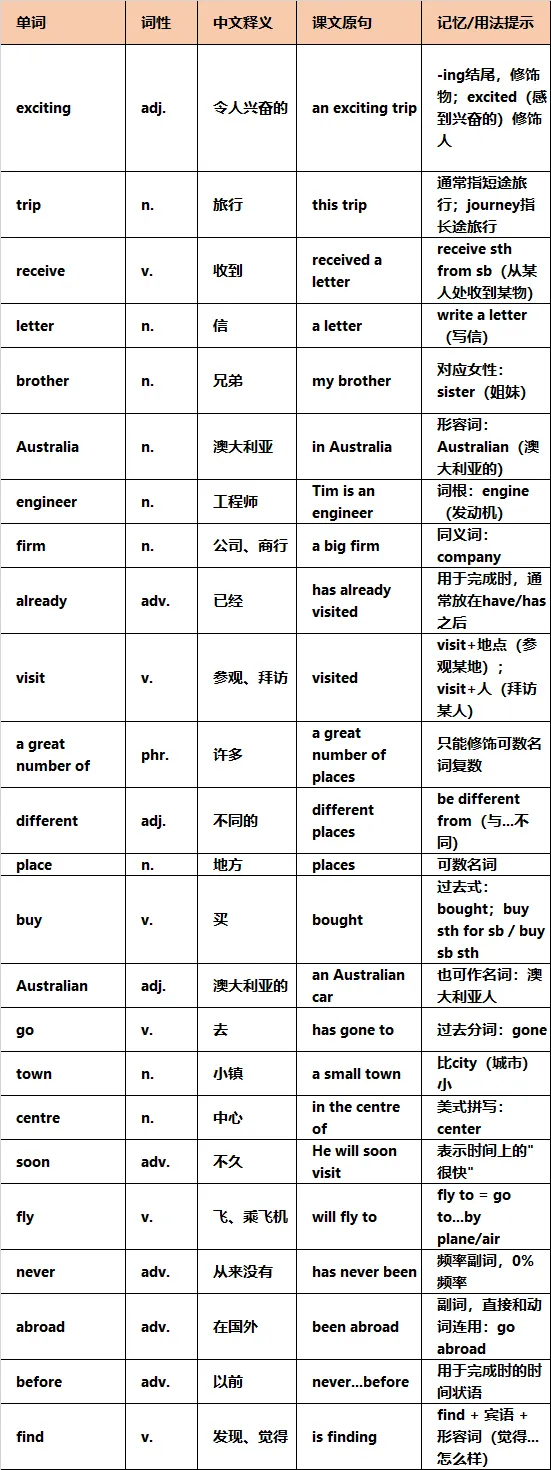
三、本课核心词汇表
课文重点词汇
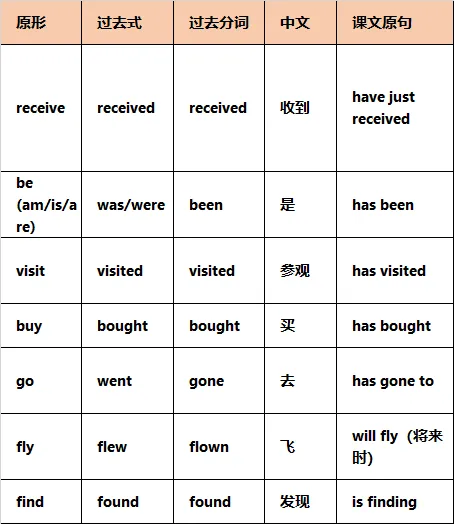
本课出现的动词过去式和过去分词
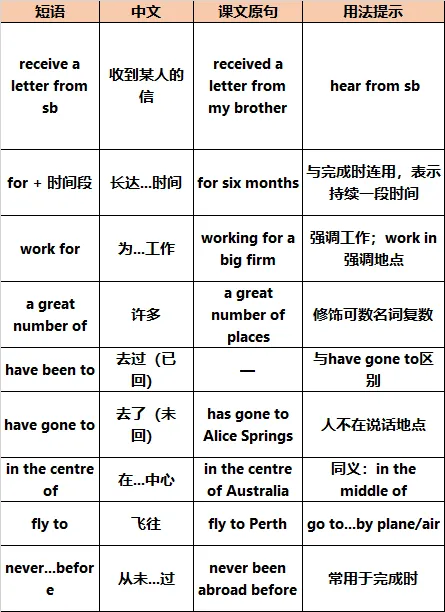
本课重点短语
四、逐句精讲笔记
1. I have just received a letter from my brother, Tim. 我刚刚收到弟弟蒂姆的来信。
【词汇讲解】
have just received:现在完成时,just表示"刚刚",常与完成时连用
receive a letter from sb:收到某人的来信
Tim:my brother的同位语,说明弟弟的名字
【语法点1:现在完成时的基本用法】现在完成时结构:have/has + 过去分词用法:表示过去发生的动作对现在有影响或产生结果
本句中,收到信这个动作刚刚发生,所以用现在完成时。
【语法点2:同位语】Tim是my brother的同位语,补充说明"我弟弟"的名字叫Tim。
同位语的标志:两个名词或短语放在一起,后者对前者进行补充说明,通常用逗号隔开。例句:
This is my friend, John. 这是我的朋友约翰。
Beijing, the capital of China, is a beautiful city. 北京,中国的首都,是一座美丽的城市。
2. He is in Australia. 他现在在澳大利亚。
【词汇讲解】
【语法点:be in + 地点】be in + 地点 = 在某地。这个结构强调的是"状态",而不是"动作"。
3. He has been there for six months. 他在那儿已经待了六个月了。
【词汇讲解】
has been:be的现在完成时形式
there:副词,指代Australia
for six months:长达六个月
【语法点1:have been + 地点】have been + 地点 = 已经在某地(强调状态持续)
【语法点2:for + 时间段】for + 时间段 表示动作或状态持续了多长时间,常用于完成时。
for two years(两年)
for three days(三天)
for a long time(很长时间)
【重要:瞬间动词不能与for连用】arrive, go, come, leave, buy, die 等瞬间动词(表示动作一发生就结束),不能直接和for + 时间段连用。
❌ He has arrived in Beijing for six months. (错误)✅ He has been in Beijing for six months. (正确)
因为"到达"这个动作是瞬间完成的,不能持续六个月;而"be in Beijing"是状态,可以持续。
4. Tim is an engineer. 蒂姆是个工程师。
【词汇讲解】
【语法点:职业的表达】表达职业时,用"a/an + 职业名词":
He is a teacher.
She is an artist.
5. He is working for a big firm and he has already visited a great number of different places in Australia. 他正在为一家大公司工作,并且已经去过澳大利亚的不少地方了。
【词汇讲解】
is working:现在进行时,表示现阶段正在从事的工作
work for:为...工作(强调工作本身)
firm:公司,同义词company
has already visited:现在完成时,already常放在have/has之后
a great number of:许多(修饰可数名词复数)
different places:不同的地方
【语法点1:work for vs. work in】
work for + 公司/人:强调为谁工作
work in + 地点:强调工作地点
work at + 具体机构:在某处上班
【语法点2:a great number of】a great number of = a lot of(许多),但只能修饰可数名词复数:
不能说 a great number of water(❌),因为water不可数。
类似短语还有:
a large number of(大量)
a small number of(少量)
【语法点3:already的位置】already通常放在have/has之后,过去分词之前:
have already visited
has already finished
6. He has just bought an Australian car and has gone to Alice Springs, a small town in the centre of Australia. 他刚买了一辆澳大利亚小汽车,现在去了澳大利亚中部的小镇艾利斯斯普林斯。
【词汇讲解】
has just bought:现在完成时,just表示"刚刚"
an Australian car:一辆澳大利亚产的汽车
has gone to:去了(人已离开,不在说话地点)
Alice Springs:地名,澳大利亚中部小镇
a small town...:Alice Springs的同位语,说明这个地方的位置
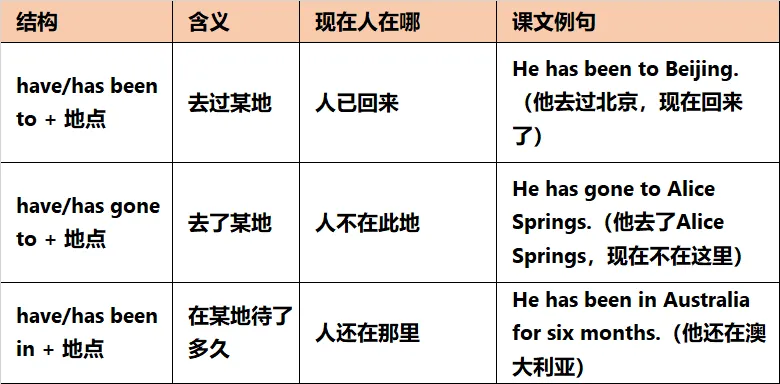
【语法点1:have gone to vs. have been to(重点!)】
这是本课最重要的语法点之一:
| | |
|---|
| have/has gone to + 地点 | | |
| have/has been to + 地点 | | |
例句对比:
【语法点2:同位语再次出现】a small town in the centre of Australia 是 Alice Springs 的同位语,补充说明Alice Springs是什么样的地方。
7. He will soon visit Darwin. 他不久还将到达尔文去。
【词汇讲解】
【语法点:一般将来时】will + 动词原形 表示将来要发生的动作:
He will visit...
I will go...
They will come...
8. From there, he will fly to Perth. 从那里,他再飞往珀斯。
【词汇讲解】
【语法点:fly to】fly to + 地点 = go to...by plane / by air(乘飞机去某地)。
【语法点:句首状语】From there 放在句首,起到承上启下的作用,强调地点的转移。
9. My brother has never been abroad before, so he is finding this trip very exciting. 我弟弟以前从未出过国,因此,他觉得这次旅行非常激动人心。
【词汇讲解】
【语法点1:never...before】never...before 是一个常用搭配,表示"以前从未...",常与现在完成时连用:
【语法点2:find + 宾语 + 宾语补足语】find + 宾语 + 形容词 表示"发现/觉得某人/某物怎么样":
【语法点3:find的进行时】一般情况下,find表示"觉得"时,很少用进行时。但在口语中,I'm finding / We're finding 常用来表示"逐渐觉得、开始觉得",强调一个逐渐变化的过程。
课文用 is finding,暗示Tim随着旅行的进行,正在逐渐感受到这次旅行的 exciting。
【语法点4:so引导结果状语从句】so 是连词,连接两个句子,表示因果关系:
五、核心语法:现在完成时(Present Perfect Tense)
本课的核心语法是现在完成时。我们将系统地梳理这个时态的用法。
1. 现在完成时的构成
| | |
|---|
| I/You/We/They have + 过去分词 | I/You/We/They have not (haven't) + 过去分词 | Have |
| He/She/It has not (hasn't) + 过去分词 | Has |
2. 现在完成时的用法
用法一:表示过去发生的动作对现在造成的影响或结果
课文例句:
用法二:表示从过去持续到现在的动作或状态
课文例句:
用法三:表示经历(曾经做过某事)
课文例句:
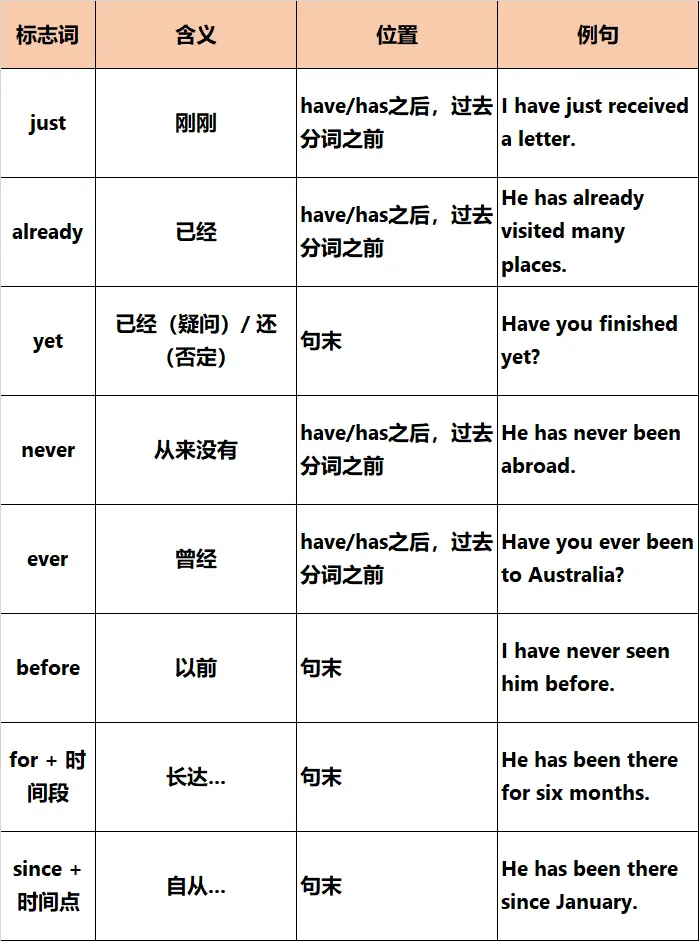
3. 现在完成时的标志性词语
4. have been to vs. have gone to(重点辨析)
5. 瞬间动词与延续性动词
瞬间动词(也叫终止性动词):动作一发生就结束,不能持续。延续性动词:动作可以持续一段时间。
❌ He has arrived in Beijing for six months.(arrive是瞬间,不能持续)✅ He has been in Beijing for six months.(be in是状态,可以持续)
六、实用口语积累
本课有几个非常实用的口语表达,建议熟记:
I've just received a letter from... 我刚收到...的来信。
I have been there for... 我在那儿待了...
I have already visited... 我已经去过...
Have you ever been to...? 你去过...吗?
I find this very exciting. 我觉得这很激动人心。