【特别声明】本文旨在进行英语学习方法的交流与教学研究。所涉及《新概念英语》原文内容版权归原作者L.G. Alexander及出版方外语教学与研究出版社所有。本文内容为基于正版教材的学习笔记和教学参考,仅供学习交流之用。若喜欢本教材,请务必购买正版实体书。
一、课文导读
本课学习目标
今天我们要学习的是新概念英语第二册的第三课,标题是 "Please send me a card"(请给我寄一张明信片)。
这是一个关于"明信片焦虑"的有趣故事——作者去意大利度假,每天都想着要给朋友们寄明信片,结果拖到最后一天,买了37张明信片,在房间里憋了一整天,却一张也没写成!这个故事是不是很熟悉?相信很多人都有过类似的经历。
本课的重点知识点包括:
文化小知识:关于明信片文化
在西方,度假时给朋友寄明信片是一种非常普遍的传统。明信片上通常印有当地的风景名胜,背面写几句问候语。这种习惯既是对朋友的挂念,也是一种"炫耀"自己正在度假的方式。这也是为什么课文中作者虽然很烦恼,却还是想寄明信片的原因。
有趣的是,课文的最后一句"but I did not write a single card!"用了single这个词,语气比普通的否定强得多,表现出作者对自己拖延症的无奈和懊恼。
二、课文原文
Lesson 3 Please send me a card
Postcards always spoil my holidays. Last summer, I went to Italy. I visited museums and sat in public gardens. A friendly waiter taught me a few words of Italian. Then he lent me a book. I read a few lines, but I did not understand a word. Every day I thought about postcards. My holidays passed quickly, but I did not send any cards to my friends. On the last day I made a big decision. I got up early and bought thirty-seven cards. I spent the whole day in my room, but I did not write a single card!
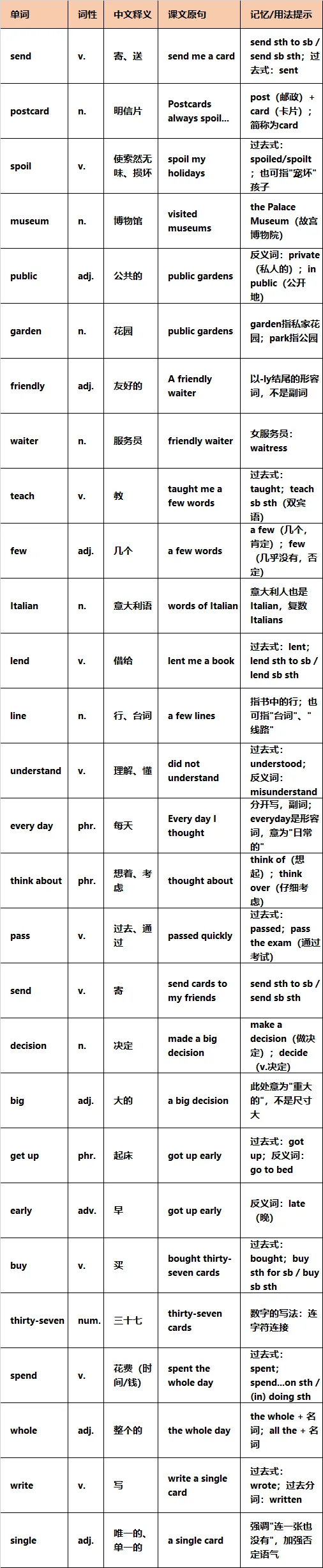
三、本课核心词汇表
课文重点词汇
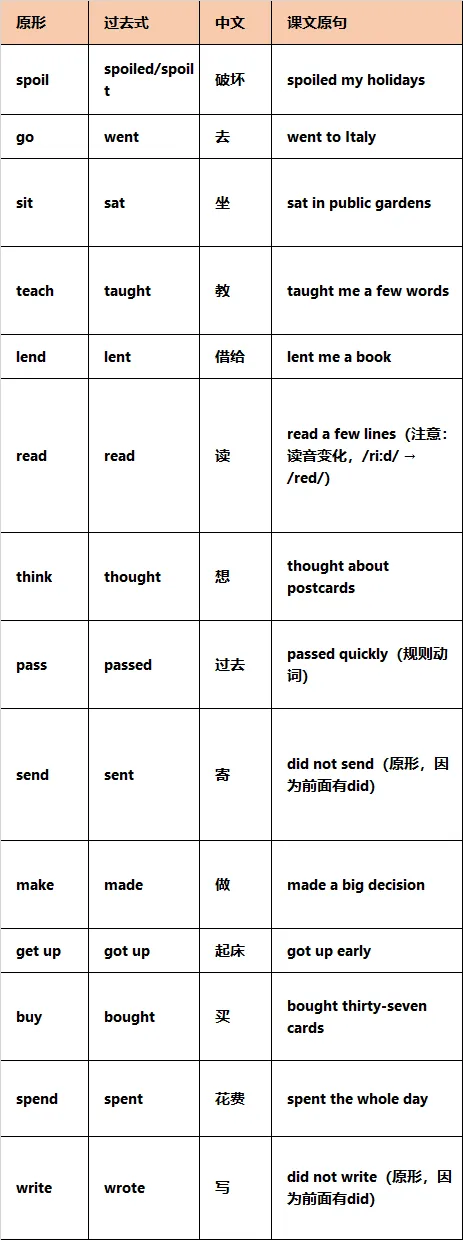
本课出现的动词过去式(不规则动词)
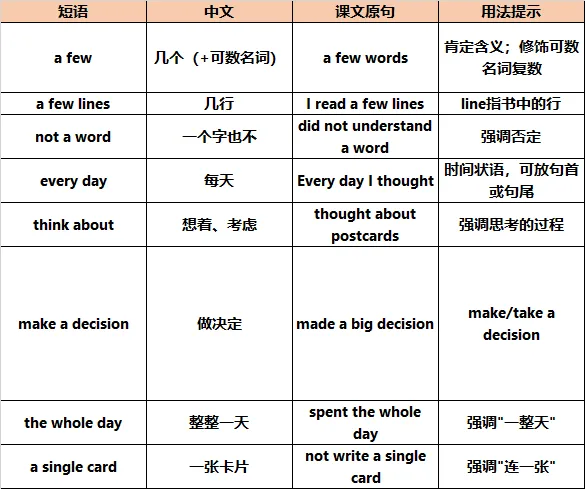
本课重点短语
四、逐句精讲笔记
1. Postcards always spoil my holidays. 明信片总是搅得我假日不得安宁。
【词汇讲解】
【语法点:spoil的两种含义】spoil既可以指精神上的"破坏"(如破坏心情、破坏假期),也可以指"宠坏"(多用于孩子):
【语法点:一般现在时的用法】本句用一般现在时always spoil,是因为这是作者经常发生的、习惯性的情况,不是特指某一次。
2. Last summer, I went to Italy. 去年夏天,我去了意大利。
【词汇讲解】
【语法点:时间状语的位置】Last summer后面用了逗号,主要是为了突出作者去年暑假所做的事情。时间状语可以放在句首(强调时间),也可以放在句尾(常规位置)。
3. I visited museums and sat in public gardens. 我参观了博物馆,还去了公园。
【词汇讲解】
【词汇辨析:garden vs. park】
4. A friendly waiter taught me a few words of Italian. 一位好客的服务员教了我几句意大利语。
【词汇讲解】
【语法点1:friendly的词性】以-ly结尾的词很多是副词,但friendly是形容词。类似的还有:lovely(可爱的)、brotherly(兄弟般的)、fatherly(父亲般的)、motherly(母亲般的)、manly(有男子气概的)。
可以说:He is friendly. 但不能说 He smiled friendly。应该说:He smiled in a friendly way。
【语法点2:a few + 可数名词】a few 表示"几个",修饰可数名词复数,表示肯定含义,相当于some, a small number of。
【语法点3:语言表达】因为"语言"不可数,所以既可以说:
5. Then he lent me a book. 然后,他借给了我一本书。
【词汇讲解】
then:然后。
lent:lend(借给)的过去式。
me:间接宾语(人)。
a book:直接宾语(物)。
【语法点:双宾语结构(重点!)】lend是一个可以带双宾语的动词。双宾语结构是:
课文原句:lent me a book = lent a book to me
类似用法的动词还有:give, send, pass, teach, show, tell, write, pay等。
6. I read a few lines, but I did not understand a word. 我读了几行,但一个字也不懂。
【词汇讲解】
【语法点:not...a的强调否定】not...a word比not understand的否定语气更强。意思是"连一个字也不懂"。
7. Every day I thought about postcards. 我每天都想着明信片的事。
【词汇讲解】
【语法点:every day vs. everyday】
【语法点:think about vs. think of】
8. My holidays passed quickly, but I did not send any cards to my friends. 假期过得真快,可我还没有给我的朋友们寄过一张明信片。
【词汇讲解】
【语法点:send的双宾语结构】send和lend一样,也是双宾语动词:
课文用的是:send cards to my friends(直接宾语在前,间接宾语在后,加to)
9. On the last day I made a big decision. 到了最后一天,我作出了一项重大决定。
【词汇讲解】
【语法点:make a decision】这是一个常用的词语搭配,意为"做决定":
10. I got up early and bought thirty-seven cards. 我早早起了床,买来了37张明信片。
【词汇讲解】
【语法点:buy的双宾语结构】buy也是双宾语动词,但间接宾语前用for,不是to:
课文用的是直接宾语(thirty-seven cards),没有出现间接宾语。
11. I spent the whole day in my room, but I did not write a single card! 我在房间里关了整整一天,然而竟连一张明信片也没写成!
【词汇讲解】
【语法点1:spend的用法】spend表示"花费(时间/金钱)",常用结构:
【语法点2:whole的用法】whole意为"整个的",常用结构:the whole + 名词:
也可以说:all the + 名词,意思相同:
【语法点3:not a single的强调结构(重点!)】not a single... 是强调否定的结构,语气比not a...更强。
比较:
类似的强调结构还可以用not a single + 名词,表示"连一个...也没有":
五、核心语法
1. 一般过去时复习
本课的故事发生在last summer,所以全篇都用一般过去时。第一句用一般现在时(Postcards always spoil my holidays)是描述一般情况,从第二句开始全部用过去时。
常用时间状语(只能与过去时连用):
2. 双宾语结构(Direct and Indirect Object)【本课重点】
许多及物动词可以跟两个宾语:
直接宾语:动作所涉及的事物(通常是物)
间接宾语:动作是对谁做的或为谁做的(通常是人)
结构一:间接宾语在前,直接宾语在后
动词 + 某人 + 某物teach + me + a few wordslend + me + a book
结构二:直接宾语在前,间接宾语在后(需加介词)
动词 + 某物 + to/for + 某人teach a few words to melend a book to me
加to还是加for?
| | |
|---|
| to | | give, lend, send, pass, teach, show, tell, write, pay, read, bring, sell, promise, owe |
| for | | buy, make, find, order, cook, choose, get |
例句对比:
3. a few / few / a little / little 的区别
六、实用口语积累
本课有几个非常实用的口语表达,建议熟记:
Please send me a card. 请给我寄张明信片。
Make a decision. 做个决定。
I spent the whole day doing... 我一整天都在做...
Not a single word! 一个字也没有!
Think about it. 考虑一下。