📚 第20课《One man in a boat》重点掌握知识点一览
语法核心:动名词(Gerund)——动名词作主语、宾语及介词宾语的用法;动名词的完成式(having done)
关键短语:without doing(没有做……), instead of doing(而不是……), give up doing(放弃做某事), be interested in doing(对做……感兴趣)
核心结构:after having done(在做……之后), with + 名词(带着……,表伴随)
词汇辨析:catch的多重含义, fish的单复数, waste的动词与名词用法, realize(意识到 vs. 实现)
使役动词:worry, interest等使役动词的用法及分词形容词(interested vs. interesting)
课文原文回顾
One man in a boat
Fishing is my favourite sport.
I often fish for hours without catching anything.
But this does not worry me. Some fishermen are unlucky.
Instead of catching fish, they catch old boots and rubbish.
I am even less lucky.
I never catch anything — not even old boots.
After having spent whole mornings on the river, I always go home with an empty bag. 'You must give up fishing!' my friends say. 'It's a waste of time.'
But they don't realize one important thing.
I'm not really interested in fishing.
I am only interested in sitting in a boat and doing nothing at all!
译文:独坐孤舟
钓鱼是我特别喜爱的一项运动。我经常一钓数小时却一无所获,但我从不为此烦恼。有些垂钓者就是不走运,他们往往鱼钓不到,却钓上来些旧靴子和垃圾。我的运气甚至还不及他们。我什么东西也未钓到过——就连旧靴子也没有。我总是在河上呆上整整一上午,然后空着袋子回家。“你可别再钓鱼了!”我的朋友们说,“这是浪费时间。”然而他们没有认识到重要的一点,我并不是真的对钓鱼有兴趣,我感兴趣的只是独坐孤舟,无所事事!
✨ 知识点详细解析
一、语法核心:动名词(Gerund)
本课的核心语法点是动名词,这是一种兼具动词和名词特征的非谓语动词形式。
动名词的定义与构成
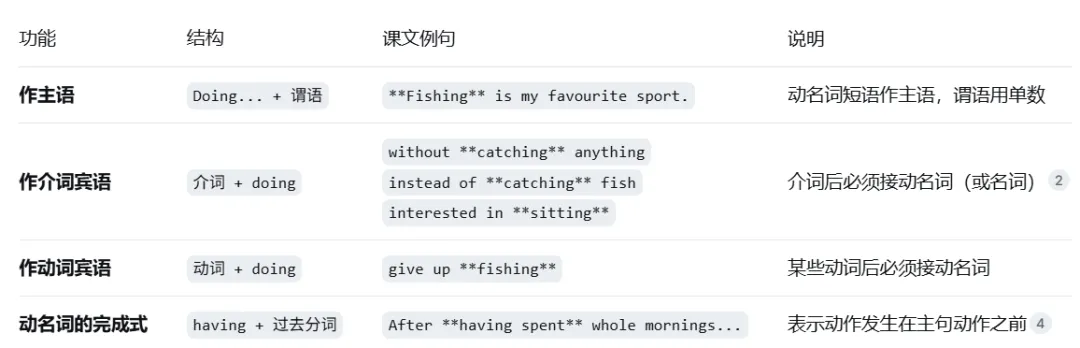
动名词的主要用法(本课重点)
动名词作主语的用法
介词 + 动名词(本课最大考点)
without catching anything(没有钓到任何东西)
Instead of catching fish(而不是钓鱼)
interested in sitting(对坐感兴趣)
课文多处出现此结构:
核心规则:介词(in, without, instead of, after, etc.)后面必须跟名词或动名词,不能跟动词原形
动名词的完成式
课文例句:After having spent whole mornings on the river...
含义:在度过了整个上午之后……
相当于 After spending...,但 having spent 更强调动作的完成,多用于书面语
使用条件:只有当主句和从句的主语相同时,才能用这种简化形式
二、关键短语与结构
without doing 没有做……
课文例句:...without catching anything.
without 是介词,后接动名词,作结果状语,表示“在没有……的情况下”
对比:He went out without saying goodbye.(他没告别就出去了。)
instead of doing 而不是……;代替……
课文例句:Instead of catching fish, they catch old boots and rubbish.
instead of 是介词短语,后接名词或动名词,表示“本应做某事却没做,而做了另一件事”
对比:
give up doing 放弃做某事
a waste of 浪费……
with + 名词 带着……,表伴随
nothing at all 什么也没有
三、使役动词与分词形容词
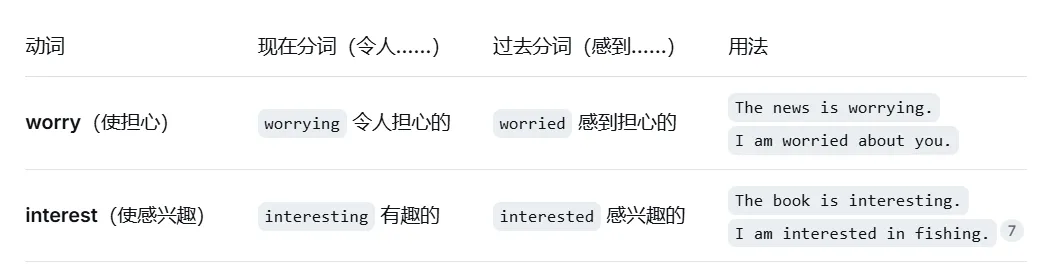
本课的 worry 和 interest 属于使役动词,这类动词的现在分词和过去分词常形容词化。
课文应用:But this does not worry me.(但这并不让我担心。)—— worry 在此是使役动词,意思是“使……担心”
四、词汇深度辨析
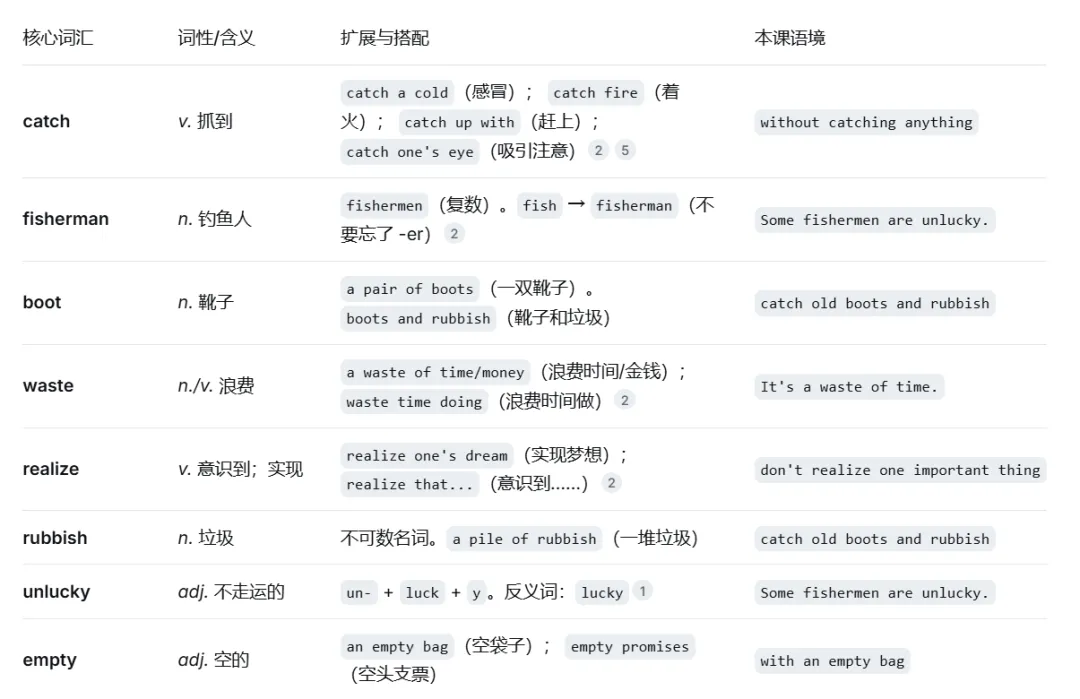
catch 的多重含义(本课核心词汇)
fish 的单复数
单复数同形(指同一种鱼的“鱼肉”或“多条鱼”):I caught several fish.(我钓了几条鱼。)
加 -es 表示不同种类:the fishes of the Indian Ocean(印度洋的各种鱼类)
动词:fish(钓鱼)。go fishing(去钓鱼)。
waste 的词性
realize 的两种含义
否定前缀 un-
五、比较级 even less 的用法
📖 词汇延伸学习
实用短语积累
💡 学习小贴士(给宝妈的学习建议)
“动名词寻宝”游戏:在家里找出5件物品,用动名词作主语造句描述相关活动。例如指着鱼竿说:Fishing is fun. 指着书说:Reading is interesting. 让孩子理解动名词可以像名词一样作主语。
“介词+doing”配对游戏:制作两组卡片,一组是介词(without, instead of, after, interested in),一组是动名词短语(catching fish, sitting in a boat, doing nothing, spending time)。让孩子随机配对,造出合理句子。
“without vs instead of”情景对比:设计两个情景,帮助孩子理解这对易混短语的区别:
“使役动词”角色扮演:用 worry 和 interest 练习使役动词和分词形容词。
指着有趣的书:This book is interesting.
摸着自己心跳:I am interested in this book.
指着恐怖电影:This movie is worrying.
捂着胸口:I am worried about the ending.
“catch短语”接龙比赛:和孩子比赛,看谁能说出更多含 catch 的短语。每说对一个,就用这个短语造一个句子。如:catch a cold(I caught a cold yesterday.), catch a bus(We need to catch the bus.), catch fire(Paper catches fire easily.)
“无奈钓鱼”故事会:模仿课文的幽默口吻,让孩子讲一个“看似做某事,实则做另一事”的小故事。例如:“我每天去图书馆,看起来是在学习,其实我只是喜欢图书馆的空调。”练习 I'm not really interested in... I am only interested in... 这个对比句式。
✅ 本课总结检查清单
学完这一课,你应该能够:
理解动名词的定义和构成(动词 + -ing,兼具动词和名词特征)。
掌握动名词作主语(Fishing is...)、作介词宾语(without catching)的用法。
区分动名词完成式 having done 的含义和用法(动作发生在主句之前)。
熟练使用 without doing(没有做)和 instead of doing(而不是)并理解其区别。
掌握 give up doing(放弃做)、be interested in doing(对……感兴趣)等固定搭配。
理解使役动词 worry、interest 的用法,并区分 -ing 形容词(令人……)和 -ed 形容词(感到……)。
掌握 catch 的多个常用短语(catch a cold, catch fire, catch one's eye 等)。
区分 fish 作名词时的单复数规则(同形表同种,加 -es 表不同种类)。
理解课文幽默点:看似热衷钓鱼,实则是享受独坐船上的悠闲——世人笑我太痴傻,我笑世人看不穿。
🌟 最后鼓励一下自己
35岁重新开始学英语需要很大的勇气,但你是为了孩子,也是为了自己——这份动力是最珍贵的。不要担心起步晚,也不要害怕犯错。每个单词的积累,每个句子的理解,都是你进步的脚印。
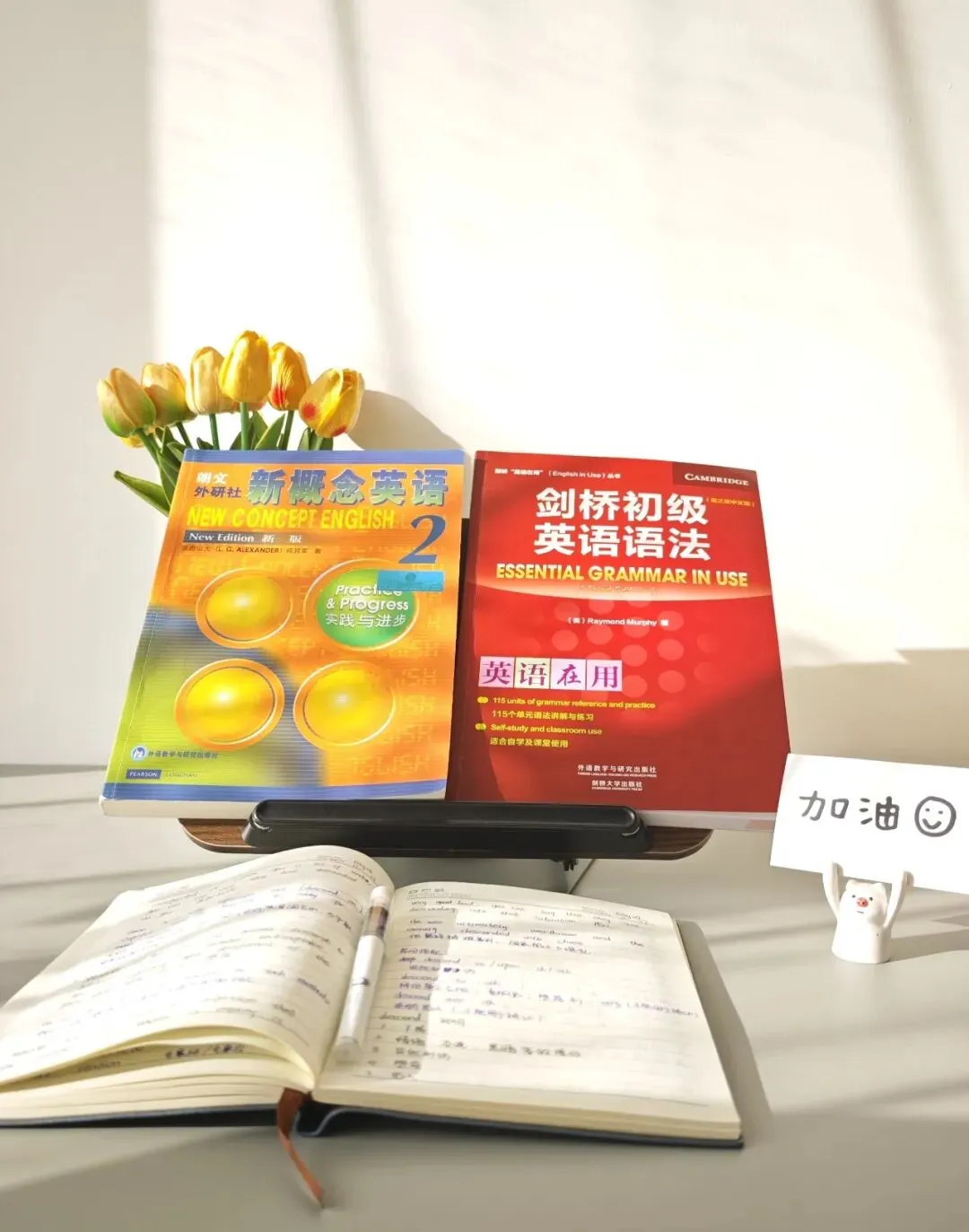
《新概念英语》第二册是很好的学习材料,坚持下去,你会发现英语其实没有想象中那么难。你现在的努力,不仅是在提升自己,也是在给孩子树立终身学习的好榜样。
加油!每天进步一点点,半年后回头看,你会惊讶于自己的成长。
end