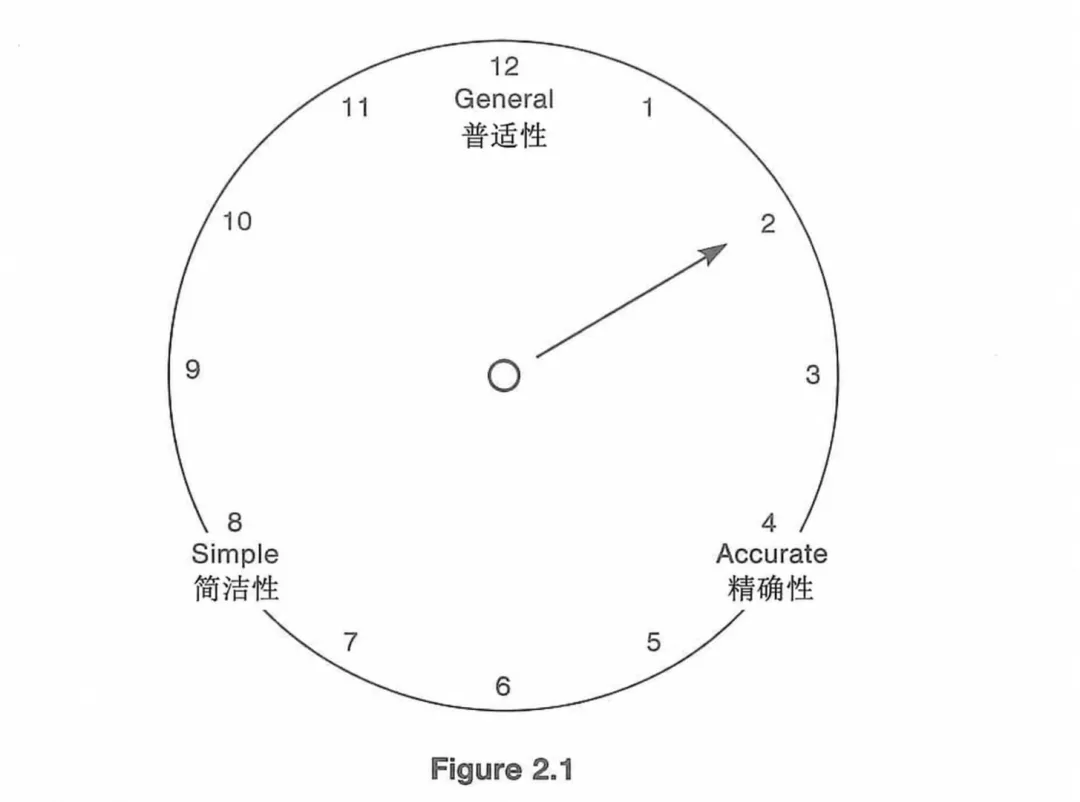
原文:Consider some examples. Two o'clock research is general and accurate but is also difficult. Psychoanalytic theory (Fenichel 1945), Levinson's book on organizational diagnosis (Levinson 1972), and Bateson's (1972) work are good examples. Six o'clock research is accurate and simple, but its generality is suspect. Coalition theory (Komorita and Chertkoff 1973), much of which is tied to highly contrived situations, is a good example of this position. It's interesting that lab studies as well as case studies share positions at six o’clock. Both preserve accuracy and simplicity and sacrifice general relevance. The final position, ten o'clock research, combines generality and simplicity at the expense of accuracy. Concepts such as the organized anarchy, loose coupling, deviation amplification, and the Peter Principle illustrate this position.
参考译文:考虑一些例子。两点钟方向的研究具有普适性和精确性,但实现起来也很困难。精神分析理论费尼切尔、莱文森的组织诊断著作以及贝特森的研究都是很好的例子。六点钟方向的研究具有精确性和简洁性,但其普适性值得怀疑。联盟理论就是一个很好的例子,该理论很大程度上与高度人为控制的情境绑定。有趣的是,实验室研究和案例研究都位于六点钟方向——两者都保持了精确性和简洁性,却牺牲了普适性。最后一个位置是十点钟方向的研究,它结合了普适性和简洁性,但以精确性为代价。诸如"有组织的混乱"、"松散耦合"、"偏差放大"和"彼得原理"等概念都体现了这一位置。