单元主题:跨文化交流——
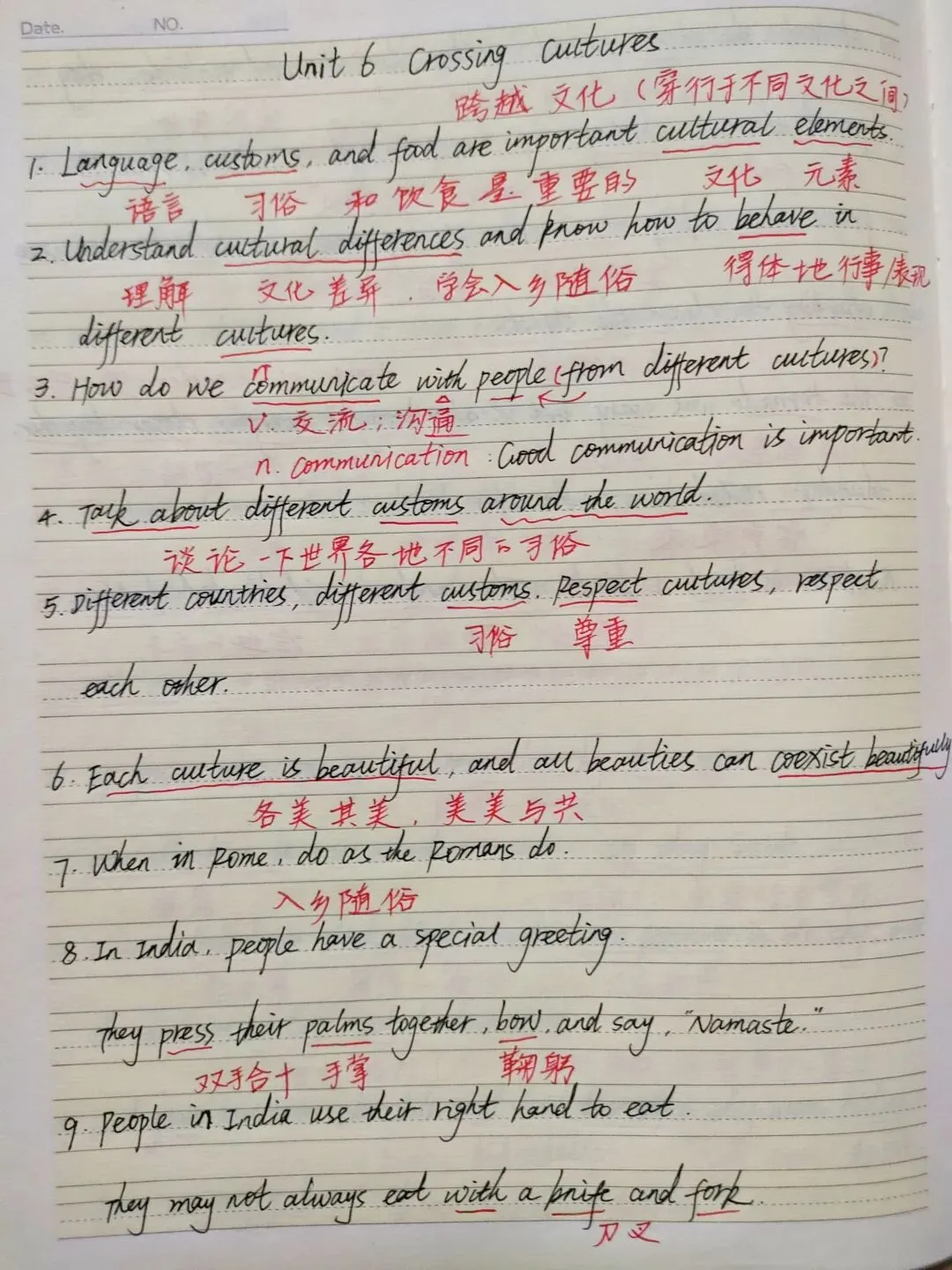
How do we communicate with people from different cultures?
一 、相关英语词汇:
International Chinese language Day 国际中文日
Chinese cultural elements中国文化元素
Chinese style 中国风
custom 习俗
different customs 不同的习俗
common 普遍的→uncommon 不寻常的
proper 合适的→improper 不合适的
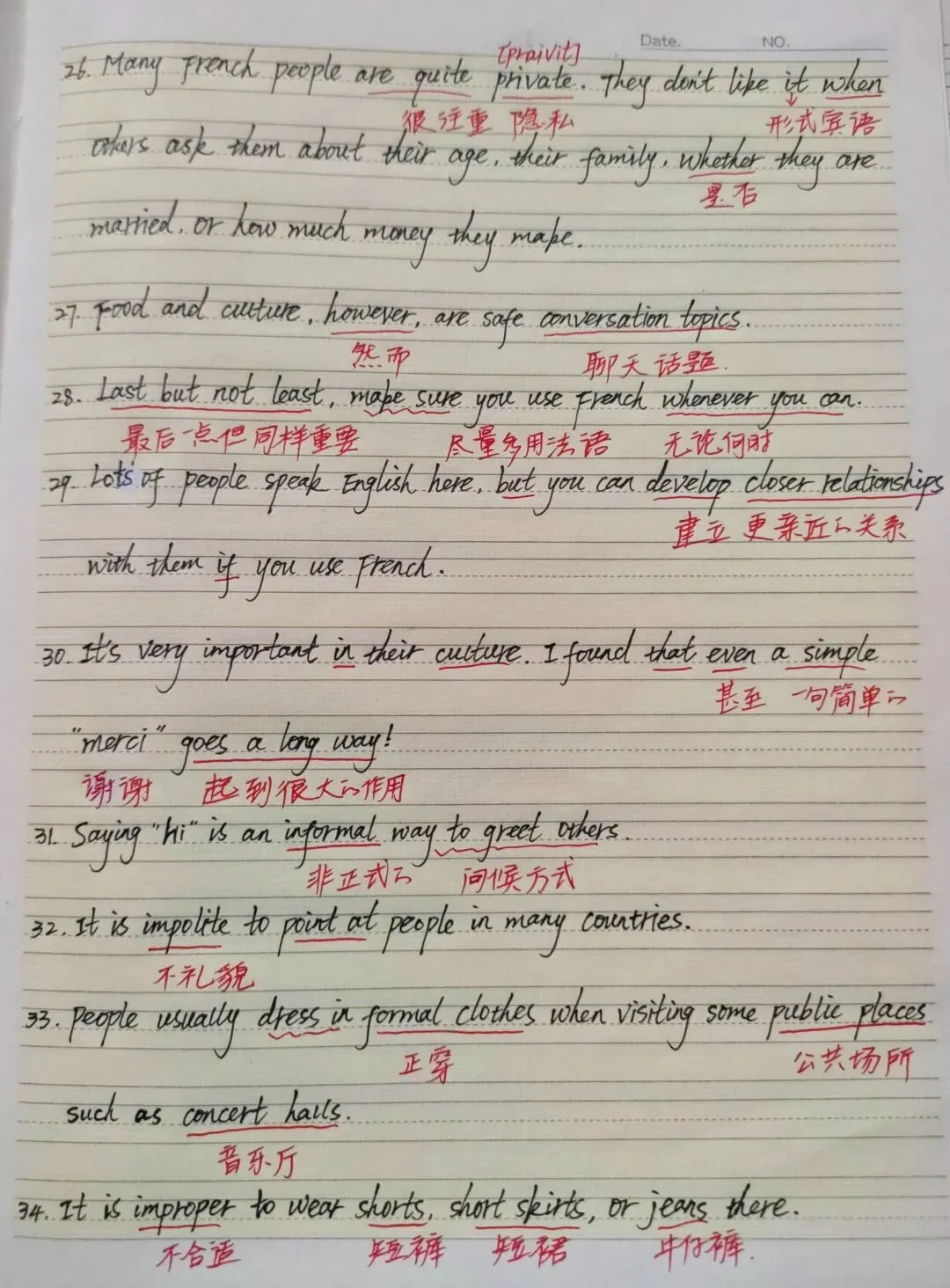
privacy n.隐私→private adj.私人的
tradition n.传统→traditional adj. 传统的
culture n. 文化→cultural adj .文化的
cultural differences 文化差异
different cultures 不同的文化
manner 方式;礼仪
value 价值观
beIief 信仰
behavior 行为
gesture 手势
greeting 问候
shake hands 握手
kiss on the cheek 亲吻脸颊(贴面礼,常见于法国、意大利、拉丁美洲等)
bump fists 碰拳(朋友或熟人间的随意问候)
rub noses 碰鼻礼(新西兰毛利人的传统问候方式)
hug 拥抱(欧美、拉美等文化中的问候或告别)
bow 鞠躬(韩国、日本等东亚文化,表尊敬)
Asian 亚洲的;亚洲人
Paris 巴黎
Germany 德国
Indian 印度的;印度人的;印度人
二、重点短语:
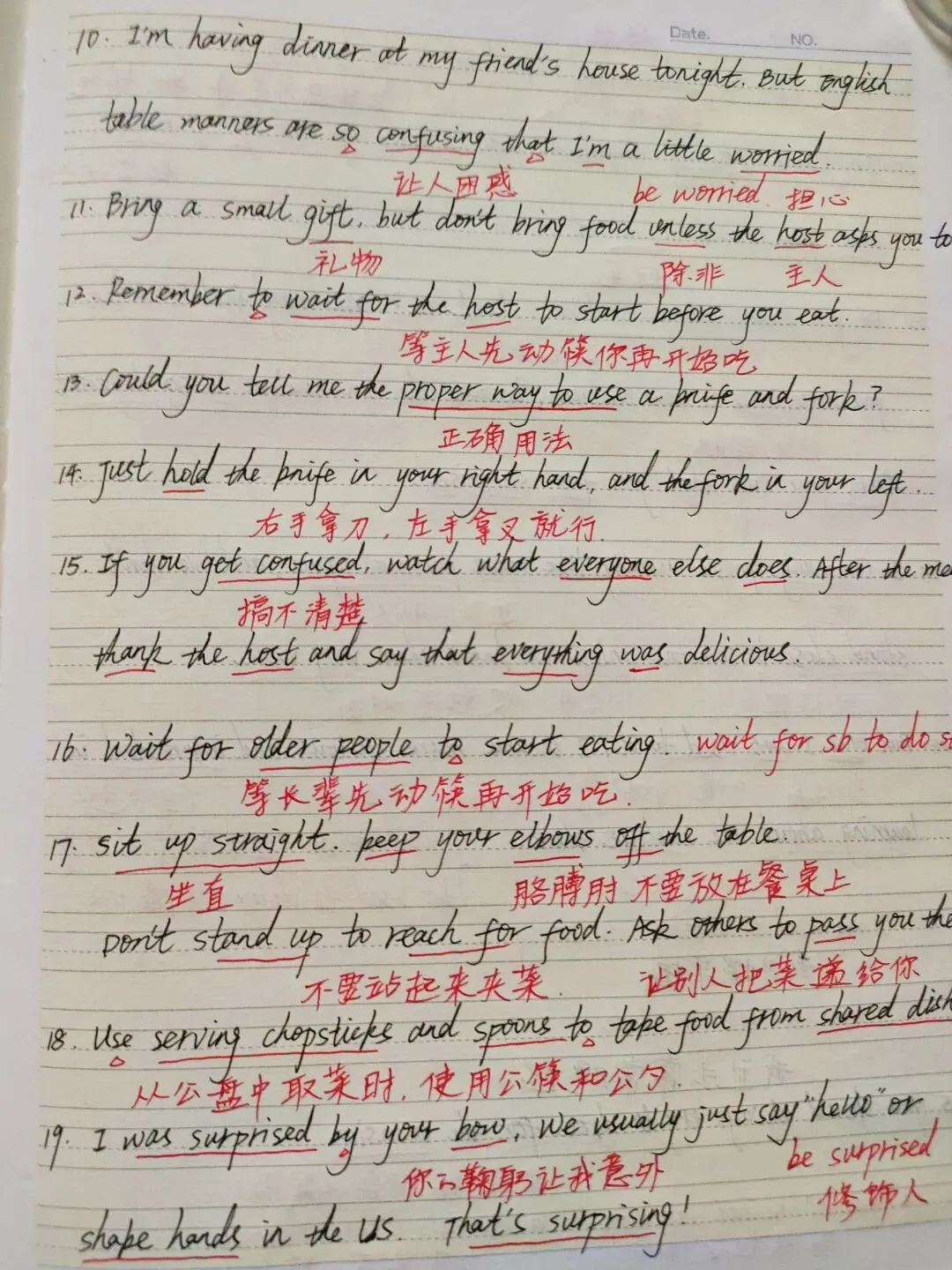
sit up 坐直
keep …off 使避开;使不碰到
so……that 如此……以至于……
enjoy yourself 过得愉快;玩得开心
body language 肢体语言
table manners 餐桌礼仪
serving chopsticks 公筷
learn basic greetings学习基本问候礼仪
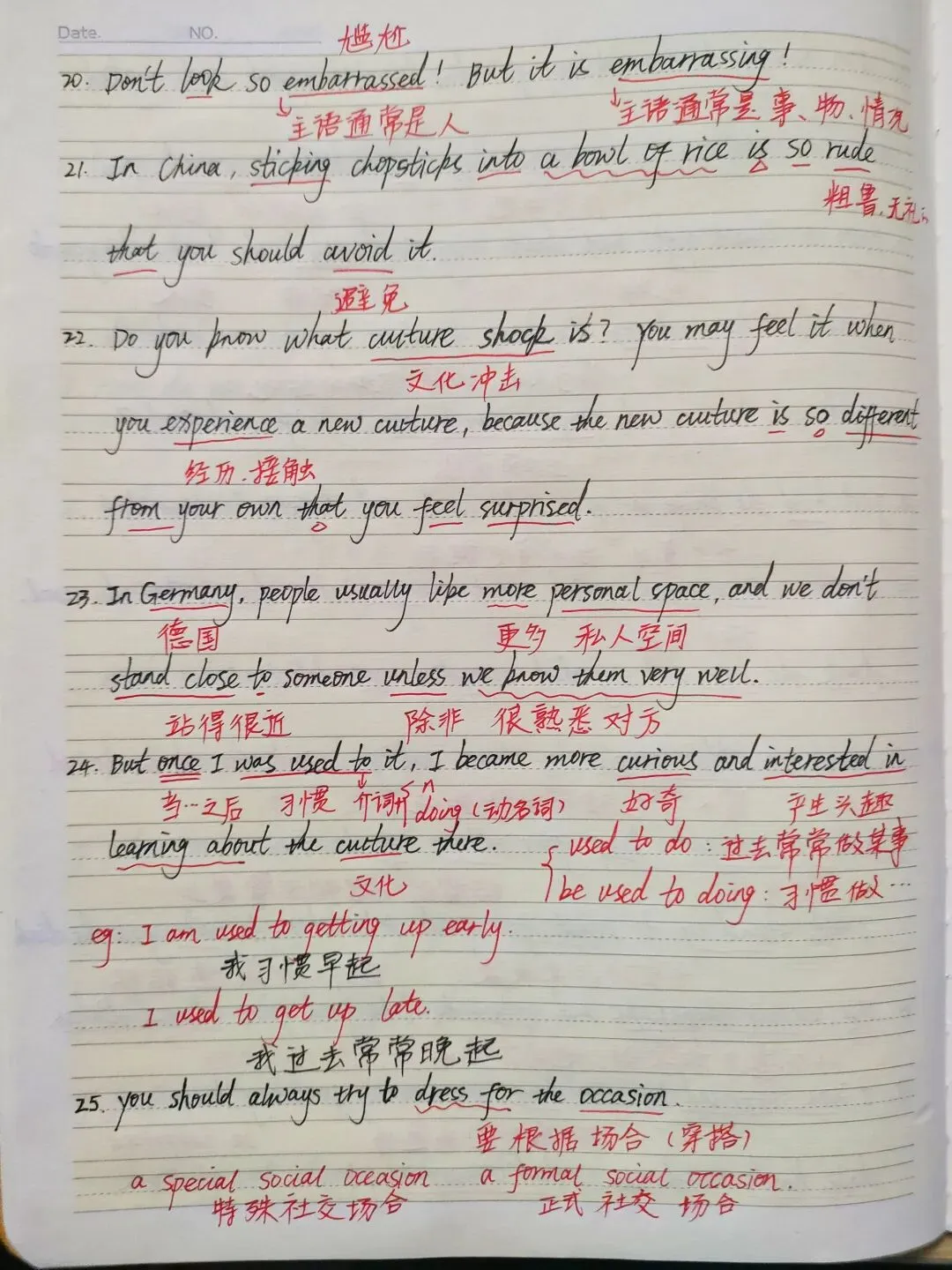
be/get used to doing sth 习惯于做某事
used to do sth 过去常常做某事
hear from 得到……消息
safe conversation topics 安全的对话话题
common greetings 常见问候语
in one's forties 在某人40多岁的时候
go a long way 帮助很大
get along 相处融洽;进展
sign -off 结束写信
wait for somebody to do something
等某人做某事
personal space 私人空间
Interest in doing sth 对做某事感兴趣
culture shock 文化冲击
a special occasion 特殊场合
a formal occasion 正式场合
last but not least 最后一点同样重要
can’t wait to do sth 迫不及待做某事
first impressions 第一印象
look forward to doing sth 期待做某事
三、语法梳理:
1. 区分–ing 形容词和–ed 形容词
-ing 结尾形容词(如 embarrassing)→ 修饰事、物、情况,描述引起感受的性质(“令人…”),主语通常是 事物、情况、事件。
例:The situation was embarrassing.
-ed 结尾形容词(如 embarrassed)→ 修饰人,描述人的主观感受(“感到…”),主语通常是人或人的表情、声音、样子等。
例:Don't look so embarrassed!But it is embarrassing!
2. so…… that , unless , as soon as引导 的状语从句
① so … that …(如此……以至于……)
引导结果状语从句,表示“因为前面太…,所以导致后面结果”。
时态:主从句时态一般保持一致,根据语境用过去或现在。
结构:so + 形容词/副词 + that + 句子
例:In Kenya,being late is so common that we should be patient and not expect people to be on time.
② unless(除非……否则……)
引导条件状语从句,相当于 if not。
主将从现:主句是将来时,从句(unless)用一般现在时表将来。”但当句子描述的是一般性事实、客观规律或习惯性的动作时,主句和从句都可以用一般现在时。
注意:主句也可以是否定句或情态动词。
例:You will fail unless you work hard.(= You will fail if you don't work hard.)
In Turkey,People don't kiss one another on the cheek unless they are good friends.(描述习惯)
③ as soon as(一……就……)
引导时间状语从句,表示两个动作几乎接连发生。
主将从现:主句用将来时,从句(as soon as)用一般现在时表将来。描述习惯、真理、客观规律时,主句从句都可以用一般现在时。
过去时:描述过去的事,主从句可以都用一般过去时。
例:I will call you as soon as I arrive.(主将从现)
He left as soon as he finished the work.(描述过去)
In Japan,take off your shoes assoonasyou enter someone's home.(描述习惯)
四、重点句型