Despite all their efforts, Mrs. Bennet and her five daughters could not get a satisfying description of their new neighbor, Mr. Bingley, from Mr. Bennet. They tried direct questions, clever guesses, and distant thoughts, but he avoided giving any clear answer. Finally, they had to accept the news from their neighbour, Lady Lucas. Her report was very good. Sir William had been much pleased with him. Mr. Bingley was quite young, wonderfully handsome, very pleasant, and,best of all,he planned to attend the next ball. Nothing could be more delightful! In those days, to be fond of dancing was seen as a certain step toward falling in love, and so bright hopes were formed about Mr. Bingley’s heart.
“If I can only see one of my daughters happily settled at Netherfield,” said Mrs. Bennet to her husband, “and all the others equally well married, I shall have nothing to wish for.”
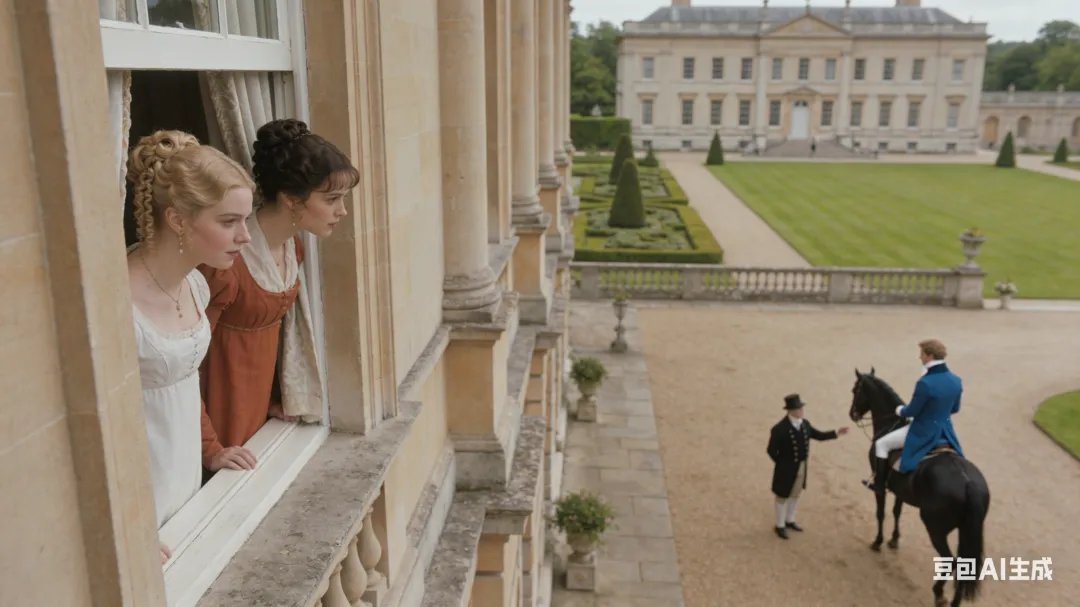
A few days later, Mr. Bingley returned Mr. Bennet’s visit, sitting about ten minutes with him in the library. He had hoped to see the young ladies, whose beauty he had heard much about, but he saw only the father. The ladies were somewhat more fortunate, for they saw from an upper window that he wore a blue coat and rode a black horse.
An invitation to dinner was soon sent. Mrs. Bennet had already planned the meals to show her good housekeeping, but a reply came that put it all off. Mr. Bingley was obliged to be in town the next day and so could not accept. Mrs. Bennet was quite upset. She could not imagine what business he could have in town so soon after arriving in Hertfordshire, and she began to fear that he might always be moving about and never properly settled at Netherfield. Lady Lucas calmed her a little by suggesting he had gone to London only to gather a large party for the ball. A report soon followed that Mr. Bingley was to bring twelve ladies and seven gentlemen to the assembly. The Bennet girls were sad about such a number of ladies, but were comforted the day before the ball to hear he brought only six from London—his five sisters and a cousin. And when the party entered the room, it consisted of only five altogether: Mr. Bingley, his two sisters, the husband of the eldest, and another young man.
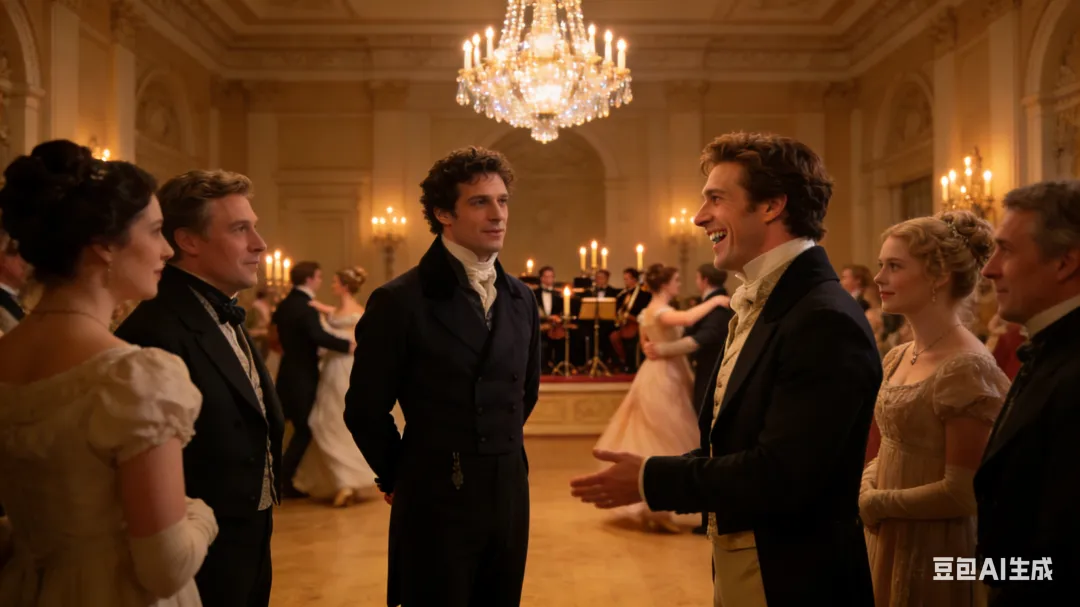
Mr. Bingley was good-looking and gentlemanlike. He had a pleasant face and easy, natural manners. His sisters were fine women with an air of decided fashion. His brother-in-law, Mr. Hurst, merely seemed to be the gentleman. But his friend Mr. Darcy soon drew the attention of the room by his fine, tall person, handsome looks, noble appearance, and the report that spread within minutes that he had ten thousand pounds a year. The gentlemen pronounced him a fine figure of a man. The ladies declared he was much handsomer than Mr. Bingley. He was looked at with great admiration for about half the evening until his manners gave a dislike which turned the tide of his popularity. He was found to be proud, above his company, and above being pleased. Not even his large estate in Derbyshire could then save him from having a most forbidding, disagreeable face and being unworthy of comparison with his friend.
Mr. Bingley soon made himself acquainted with all the principal people in the room. He was lively and unreserved(毫无保留的), danced every dance, was angry that the ball ended so early, and talked about giving one himself at Netherfield. Such pleasant qualities spoke for themselves. What a contrast between him and his friend! Mr. Darcy danced only once with Mrs. Hurst and once with Miss Bingley, refused introductions to any other lady, and spent the rest of the evening walking about the room, speaking occasionally to his own party. His character was decided: he was the proudest, most disagreeable man in the world, and everybody hoped he would never come again. Among the strongest against him was Mrs. Bennet, whose dislike was sharpened because he had slighted one of her daughters.
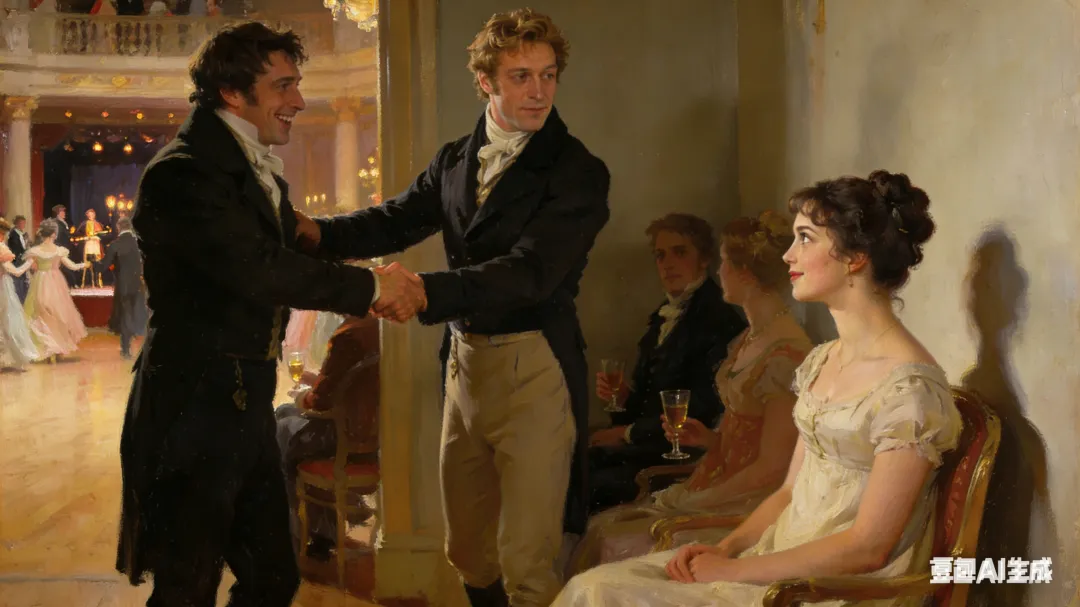
Elizabeth Bennet had been obliged, by the lack of gentlemen, to sit down for two dances. During part of that time, Mr. Darcy stood near enough for her to hear a conversation between him and Mr. Bingley.
“Come, Darcy,” said he, “I must have you dance. I hate to see you standing about by yourself in this stupid manner. You had much better dance.”
“I certainly shall not. You know how I detest it, unless I am particularly acquainted with my partner. At such an assembly as this it would be unbearable. Your sisters are engaged, and there is not another woman in the room whom it would not be a punishment to me to stand up with.”
“I would not be so hard to please as you are,” cried Mr. Bingley. “Upon my honour, I never met with so many pleasant girls in my life as I have this evening; and several of them are uncommonly pretty.”
“You are dancing with the only handsome girl in the room,” said Mr. Darcy, looking at the eldest Miss Bennet.
“Oh! She is the most beautiful creature I ever beheld! But there is one of her sisters sitting down just behind you, who is very pretty, and I dare say very agreeable. Do let me ask my partner to introduce you.”
“Which do you mean?” Turning round, he looked for a moment at Elizabeth till catching her eye, he withdrew his own and coldly said, “She is tolerable, but not handsome enough to tempt me. I am in no humour at present to pay attention to young ladies who are slighted by other men. You had better return to your partner and enjoy her smiles, for you are wasting your time with me.”
Mr. Bingley followed his advice. Mr. Darcy walked off, and Elizabeth remained with no very friendly feelings toward him. She told the story, however, with great spirit among her friends, for she had a lively, playful nature which delighted in anything ridiculous.
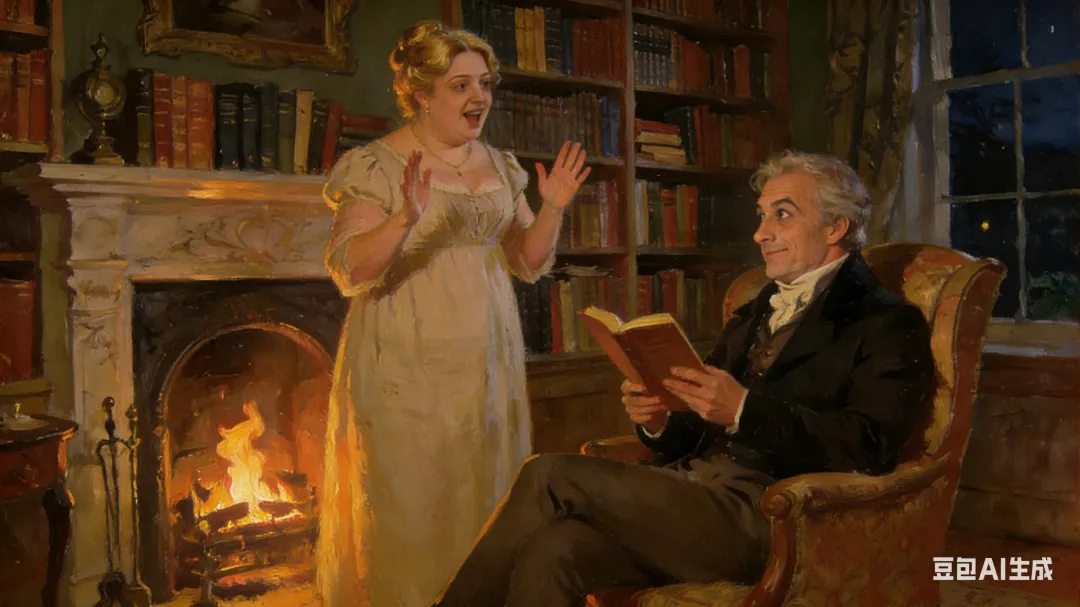
The evening passed off pleasantly to the whole family. Mrs. Bennet had seen her eldest daughter much admired by the Netherfield party. Mr. Bingley had danced with her twice, and she had been noticed by his sisters. Jane was much pleased, though in a quieter way. Elizabeth felt Jane’s pleasure. Mary had heard herself mentioned to Miss Bingley as the most accomplished girl in the neighbourhood. Catherine and Lydia had been fortunate enough never to be without partners. They returned in good spirits to Longbourn, where they found Mr. Bennet still up. With a book he was regardless of time, and now he was curious about an evening which had raised such splendid expectations.
“Oh! my dear Mr. Bennet,” she began, “we have had a most delightful evening. Jane was so admired. Nothing could be like it. Mr. Bingley thought her quite beautiful and danced with her twice! He actually danced with her twice! She was the only creature in the room that he asked a second time.”
“If he had had any pity for me,” cried her husband impatiently, “he would not have danced half so much! Say no more of his partners.”
“Oh! my dear, I am quite delighted with him. He is so very handsome! And his sisters are charming women. I never in my life saw anything more elegant than their dresses.”
Here she was interrupted. Mr. Bennet protested against any description of fine clothes. She was therefore obliged to turn to another subject, and related, with much bitterness, the shocking rudeness of Mr. Darcy.
“But I can assure you,” she added, “that Lizzy does not lose much by not pleasing him, for he is a most disagreeable, horrible man, not at all worth pleasing. So proud and so conceited that there was no bearing him! Not handsome enough to dance with! I wish you had been there to put him in his place. I quite hate the man.”
Post-reading questions:
1. Why does Mrs. Bennet feel that a love of dancing is connected to marriage, based on her hopes for Mr. Bingley?
2. How would you describe the key differences in personality between Mr. Bingley and Mr. Darcy at the ball?
3. If you could give Mr. Darcy advice on his behavior at the assembly, what would you say and why?
4. Suppose you are Elizabeth writing a letter to a friend about the ball, what would you say about Mr. Darcy’s comment and your reaction?
5. How does the importance of first impressions in the story relate to social situations in your own life?
词块积累:
1. repeated efforts 反复努力
2. obtain a description 获得描述
3. direct questions 直接提问
4. clever guesses 巧妙猜测
5. accept the account 接受说法
6 .highly favourable 高度赞许的
7. intended to come 打算前来
8. a large party 大型聚会
9. a certain step 必然步骤
10. lively hopes 热切的期望
11. happily settled 幸福地安顿
12. equally well married 同样美满地结婚
13. return one's visit 回访某人
14. heard much about... 久闻...
15. upper window 楼上的窗户
16. an invitation to dinner 晚宴邀请
17. good housekeeping 善于持家
18. put off... 推迟...
19. obliged to be 不得不...
20. quite upset 相当沮丧
21. properly settled 妥善安顿
22. calm one's fears 平息某人的担忧
23. good-looking and gentlemanlike 英俊且绅士
24. pleasant countenance 和悦的面容
25. easy manners 从容的举止
26. drew the attention 引起注意
27. noble mien 高贵的仪态
28. fine figure of a man 一表人才
29. great admiration 极大的赞赏
30. turned the tide 扭转了形势
31. unworthy of comparison 不配相比
32. made oneself acquainted 使自己结识
33. be angry that... 因…而生气
34. sharpened one's dislike 加剧了某人的厌恶
35. lack of gentlemen 男士稀少
36. sit down for two dances 坐着休息两曲
37. near enough 足够近
38. press his friend to join 敦促他的朋友加入
39. detest it 厌恶它
40. particularly acquainted 特别熟识
41. uncommonly pretty 格外漂亮
42. dare say 敢说
43. tolerable, but not handsome enough 尚可,但不够英俊
44. in no humour 没有心情
45. pay attention to 关注
46. slighted by other men 被其他男士冷落
47. waste one's time 浪费某人的时间
48. cordial feelings 亲切的感情
49. with great spirit 兴致勃勃地
50. delighted in anything ridiculous 以任何滑稽事为乐
51. much admired 备受赞赏
52. distinguished by his sisters 受到他姊妹们的青睐
53. in a quieter way 以一种更含蓄的方式
54. most accomplished girl 最多才多艺的姑娘
55. fortunate enough 足够幸运
56. in good spirits 兴致勃勃
57. regardless of time 不计时间
58. raised such expectations 引起了如此的期待
59. not worth pleasing 不值得取悦
60. too proud and conceited 过于傲慢自负
1. 改编自:
傲慢与偏见=Pride and Prejudice : 英文/(英) 简·奥斯汀(Jane Austen)著. --北京: 知识出版社
2. 图片由豆包AI生成
(个人观点,仅供参考)
 10个月宝宝每天需要喝多少奶粉?

