Lesson43 fully insured
课文原文:
1.Insurance companies are normally willing to insure anything.
保险公司通常愿意为任何东西提供保险。
2.Insuring public or private property is a standard practice in most countries in the world.
在世界上大多数国家,为公共或私人财产投保是一种常规做法。
3.If, however, you were holding an open air garden party or a fete it would be equally possible to insure yourself in the event of bad weather.
然而,如果你正在举办露天游园会或义卖会,你同样可以投保,以防天气恶劣。
4.Needless to say, the bigger the risk an insurance company takes, the higher the premium you will have to pay.
不用说,保险公司承担的风险越大,你需要支付的保费就越高。
5.It is not uncommon to hear that a shipping company has made a claim for the cost of salvaging a sunken ship.
听到航运公司为打捞沉船的费用提出索赔,这并不罕见。
6.But the claim made by a local authority to recover the cost of salvaging a sunken pie dish must surely be unique.
但地方当局为打捞一只沉没的馅饼盘而提出的索赔,肯定是独一无二的。
7.Admittedly it was an unusual pie dish, for it was eighteen feet long and six feet wide.
无可否认,那是一只非同寻常的馅饼盘,它长 18 英尺,宽 6 英尺。
8.It had been purchased by a local authority so that an enormous pie could be baked for an annual fair.
它是由地方当局购买的,目的是为年度集市烤制一个巨大的馅饼。
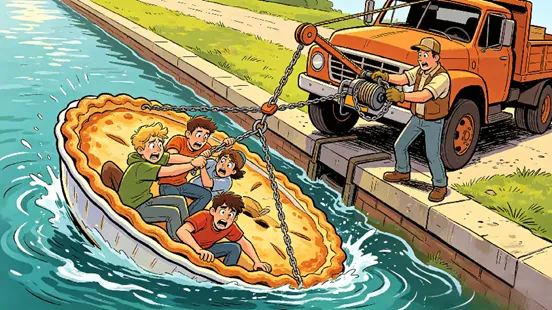
9.The pie committee decided that the best way to transport the dish would be by canal, so they insured it for the trip.
馅饼委员会决定,运输这只盘子的最佳方式是通过运河,因此他们为这次运输投了保。
10.Shortly after it was launched, the pie committee went to a local inn to celebrate.
下水后不久,馅饼委员会的成员们就去当地一家小酒馆庆祝了。
11.At the same time, a number of teenagers climbed on to the dish and held a little party of their own.
与此同时,一群青少年爬上了盘子,举办了他们自己的小型派对。
12.Dancing proved to be more than the dish could bear, for during the party it capsized and sank in seven feet of water.
事实证明,跳舞是这只盘子无法承受的,派对期间,盘子翻了,沉入了 7 英尺深的水中。
13.The pie committee telephoned a local garage owner who arrived in a recovery truck to salvage the pie dish.
馅饼委员会给当地一位汽车修理厂老板打了电话,他开着一辆救援卡车来打捞馅饼盘。
14.Shivering in their wet clothes, the teenagers looked on while three men dived repeatedly into the water to locate the dish.
青少年们穿着湿衣服冻得瑟瑟发抖,看着三个人反复潜入水中寻找盘子。
15.They had little difficulty in finding it, but hauling it out of the water proved to be a serious problem.
他们没费什么劲就找到了它,但把它从水里拖上来却是个大问题。
16.The sides of the dish were so smooth that it was almost impossible to attach hawsers and chains to the rim without damaging it.
盘子的边缘非常光滑,几乎不可能在不损坏它的情况下把缆绳和链条固定在边缘上。
17.Eventually chains were fixed to one end of the dish and a powerful winch was put into operation.
最后,链条被固定在盘子的一端,一台大功率的绞盘开始工作。
18.The dish rose to the surface and was gently drawn towards the canal bank.
盘子浮出水面,被缓缓地拉向运河岸边。
19.For one agonizing moment, the dish was perched precariously on the bank of the canal, but it suddenly overbalanced and slid back into the water.
在一个令人揪心的瞬间,盘子摇摇晃晃地停在运河岸边,但它突然失去平衡,又滑回了水里。
20.The men were now obliged to try once more.
工人们现在不得不再试一次。
21.This time they fixed heavy metal clamps to both sides of the dish so that they could fasten the chains.
这次,他们用沉重的金属夹子固定在盘子的两侧,这样就可以系上链条了。
22.The dish now had to be lifted vertically because one edge was resting against the side of the canal.
现在必须垂直提起盘子,因为它的一边靠在了运河的侧壁上。
23.The winch was again put into operation and one of the men started up the truck.
绞盘再次启动,其中一名工人发动了卡车。
24.Several minutes later, the dish was successfully hauled above the surface of the water.
几分钟后,盘子被成功地拉出了水面。
25.Water streamed in torrents over its sides with such force that it set up a huge wave in the canal.
水流如洪流般从它的两侧倾泻而下,力量之大,在运河里掀起了巨浪。
26.There was a danger that the wave would rebound off the other side of the bank and send the dish plunging into the water again.
存在一种危险:波浪会从对岸反弹回来,把盘子再次卷入水中。
27.By working at tremendous speed, the men managed to get the dish on to dry land before the wave returned.
工人们以极快的速度工作,终于在波浪返回之前把盘子弄到了干地上。
课文分析:
1. Insurance companies are normally willing to insure anything.
·句子类型:陈述句(肯定句)
·核心结构:主语 + 系动词 + 表语(形容词短语作表语)
Insurance companies (主语) + are normally willing to insure anything (表语)
·语法要点:
固定搭配be willing to do sth.表示 “愿意做某事”,是高频写作句型。
副词normally作状语,修饰形容词willing,表达 “通常情况下”。
·释义:保险公司通常愿意为任何东西提供保险。
2. Insuring public or private property is a standard practice in most countries in the world.
·句子类型:陈述句(肯定句)
·核心结构:动名词短语作主语 + 系动词 + 表语
Insuring public or private property (主语) + is (系动词) + a standard practice (表语)
·语法要点:
动名词短语Insuring public or private property作句子主语,谓语动词用单数形式is。
介词短语in most countries in the world作地点状语,修饰整个句子。
固定搭配standard practice表示 “常规做法、惯例”。
·释义:在世界上大多数国家,为公共或私人财产投保是一种常规做法。
3. If, however, you were holding an open air garden party or a fete it would be equally possible to insure yourself in the event of bad weather.
·句子类型:复合句(含虚拟语气的条件状语从句)
·核心结构:If引导的非真实条件句 + 主句(形式主语结构)
If you were holding an open air garden party or a fete (条件状语从句) + it would be equally possible to insure yourself in the event of bad weather (主句)
·语法要点:
虚拟语气:If + 主语 + were doing... ,主语 + would do...,表示与现在事实不符的假设。
形式主语it:真正的主语是不定式to insure yourself,避免句子头重脚轻。
插入语however表转折,用逗号与句子其他部分隔开。
固定短语in the event of表示 “万一、倘若”,后接名词 / 名词短语。
·释义:然而,如果你正在举办露天游园会或义卖会,你同样可以投保,以防天气恶劣。
4. Needless to say, the bigger the risk an insurance company takes, the higher the premium you will have to pay.
·句子类型:陈述句(含比较级特殊句型)
·核心结构:the + 比较级..., the + 比较级...结构(越…… 越……)
the bigger the risk (an insurance company takes), the higher the premium (you will have to pay)
·语法要点:
固定句型The + 比较级 + 主语 + 谓语, the + 比较级 + 主语 + 谓语,表示 “越……,就越……”。句中an insurance company takes和you will have to pay分别是定语从句,修饰risk和premium。
插入语Needless to say表示 “不用说,毋庸置疑”,用于句首引出观点。
·释义:不用说,保险公司承担的风险越大,你需要支付的保费就越高。
5. It is not uncommon to hear that a shipping company has made a claim for the cost of salvaging a sunken ship.
·句子类型:复合句(含宾语从句的形式主语句)
·核心结构:形式主语it + 系动词 + 表语 + 真正主语(不定式短语 + that宾语从句)
It (形式主语) + is not uncommon (系表结构) + to hear that a shipping company has made a claim for the cost of salvaging a sunken ship (真正主语)
·语法要点:
双重否定not uncommon表肯定含义 “很常见”,比common语气更强,是高级写作技巧。
that引导宾语从句,作动词hear的宾语。
固定搭配make a claim for sth.表示 “为…… 提出索赔”;介词for引出索赔的对象。
现在分词salvaging作介词of的宾语,构成the cost of doing sth.结构。
·释义:听到航运公司为打捞沉船的费用提出索赔,这并不罕见。
6. But the claim made by a local authority to recover the cost of salvaging a sunken pie dish must surely be unique.
·句子类型:陈述句(含过去分词短语作后置定语)
·核心结构:主语(含后置定语)+ 情态动词 + 系动词 + 表语
the claim (made by a local authority to recover the cost of salvaging a sunken pie dish) (主语) + must surely be unique (谓语部分)
·语法要点:
过去分词短语made by a local authority作后置定语,修饰claim,表被动含义 “由地方当局提出的”。
不定式短语to recover the cost...作目的状语,说明提出索赔的目的。
情态动词must在此表示肯定推测,surely加强推测语气。
·释义:但地方当局为打捞一只沉没的馅饼盘而提出的索赔,肯定是独一无二的。
7. Admittedly it was an unusual pie dish, for it was eighteen feet long and six feet wide.
·句子类型:并列句(由for连接的原因并列句)
·核心结构:分句 1 + for + 分句 2
Admittedly it was an unusual pie dish (分句 1) + for it was eighteen feet long and six feet wide (分句 2,表原因)
·语法要点:
连词for在此处表示补充说明的原因,语气比because弱,不能用于句首。
副词Admittedly作评注性状语,修饰整个句子,表示 “无可否认地,诚然”。
表示物体尺寸的固定表达:基数词 + 单位 + long/wide/high。
·释义:无可否认,那是一只非同寻常的馅饼盘,它长 18 英尺,宽 6 英尺。
8. It had been purchased by a local authority so that an enormous pie could be baked for an annual fair.
·句子类型:复合句(含目的状语从句的被动语态句)
·核心结构:主句(被动语态)+ so that引导的目的状语从句(被动语态)
It had been purchased by a local authority (主句) + so that an enormous pie could be baked for an annual fair (目的状语从句)
·语法要点:
过去完成时被动语态had been purchased,表示过去的过去发生的动作。
so that引导目的状语从句,从句中常使用情态动词could/might/would,表示 “为了,以便”。
从句中同样使用被动语态could be baked,强调动作的承受者。
·释义:它是由地方当局购买的,目的是为年度集市烤制一个巨大的馅饼。
9. The pie committee decided that the best way to transport the dish would be by canal, so they insured it for the trip.
·句子类型:复合并列句(含宾语从句的并列句)
·核心结构:分句 1(含that宾语从句)+ so + 分句 2
The pie committee decided that the best way to transport the dish would be by canal (分句 1) + so they insured it for the trip (分句 2,表结果)
·语法要点:
that引导宾语从句,作动词decided的宾语。
不定式短语to transport the dish作后置定语,修饰the best way,即the best way to do sth.。
连词so表因果关系,引出结果。
·释义:馅饼委员会决定,运输这只盘子的最佳方式是通过运河,因此他们为这次运输投了保。
10. Shortly after it was launched, the pie committee went to a local inn to celebrate.
·句子类型:复合句(含时间状语从句)
·核心结构:Shortly after引导的时间状语从句 + 主句
Shortly after it was launched (时间状语从句) + the pie committee went to a local inn to celebrate (主句)
·语法要点:
Shortly after引导时间状语从句,表示 “…… 之后不久”,从句中使用一般过去时被动语态was launched。
不定式短语to celebrate作目的状语,说明去酒馆的目的。
·释义:下水后不久,馅饼委员会的成员们就去当地一家小酒馆庆祝了。
11. At the same time, a number of teenagers climbed on to the dish and held a little party of their own.
·句子类型:陈述句(并列谓语结构)
·核心结构:主语 + 并列谓语 1 + 并列谓语 2
a number of teenagers (主语) + climbed on to the dish (谓语 1) + and held a little party of their own (谓语 2)
·语法要点:
固定短语At the same time表示 “与此同时”,作时间状语。
并列谓语climbed... and held...,两个动作由and连接,时态一致(一般过去时)。
固定搭配of one's own表示 “某人自己的”。
·释义:与此同时,一群青少年爬上了盘子,举办了他们自己的小型派对。
12. Dancing proved to be more than the dish could bear, for during the party it capsized and sank in seven feet of water.
·句子类型:复合并列句(含宾语从句的并列句)
·核心结构:分句 1(含宾语从句)+ for + 分句 2(并列谓语)
Dancing proved to be more than the dish could bear (分句 1) + for during the party it capsized and sank in seven feet of water (分句 2,表原因)
·语法要点:
动名词Dancing作句子主语。
固定搭配prove to be...表示 “证明是……,结果是……”。
more than引导比较状语从句,此处more than the dish could bear表示 “超出了盘子所能承受的范围”。
分句 2 中capsized and sank是并列谓语,时态一致。
·释义:事实证明,跳舞是这只盘子无法承受的,派对期间,盘子翻了,沉入了 7 英尺深的水中。
13. The pie committee telephoned a local garage owner who arrived in a recovery truck to salvage the pie dish.
·句子类型:复合句(含定语从句)
·核心结构:主句 + who引导的定语从句
The pie committee telephoned a local garage owner (主句) + who arrived in a recovery truck to salvage the pie dish (定语从句,修饰owner)
·语法要点:
who引导限制性定语从句,修饰先行词a local garage owner,在从句中作主语。
不定式短语to salvage the pie dish作目的状语,说明arrived的目的。
·释义:馅饼委员会给当地一位汽车修理厂老板打了电话,他开着一辆救援卡车来打捞馅饼盘。
14. Shivering in their wet clothes, the teenagers looked on while three men dived repeatedly into the water to locate the dish.
·句子类型:复合句(含时间状语从句和现在分词作状语)
·核心结构:现在分词短语作伴随状语 + 主句 + while引导的时间状语从句
Shivering in their wet clothes (伴随状语) + the teenagers looked on (主句) + while three men dived repeatedly into the water to locate the dish (时间状语从句)
·语法要点:
现在分词短语Shivering in their wet clothes作伴随状语,其逻辑主语是句子的主语the teenagers,二者是主动关系。
while引导时间状语从句,表示 “当…… 的时候”,强调主从句动作同时发生。
不定式短语to locate the dish作目的状语。
·释义:青少年们穿着湿衣服冻得瑟瑟发抖,看着三个人反复潜入水中寻找盘子。
15. They had little difficulty in finding it, but hauling it out of the water proved to be a serious problem.
·句子类型:并列句(由but连接)
·核心结构:分句 1 + but + 分句 2(动名词作主语)
They had little difficulty in finding it (分句 1) + but hauling it out of the water proved to be a serious problem (分句 2)
·语法要点:
固定搭配have difficulty (in) doing sth.表示 “做某事有困难”,句中little difficulty表示否定含义 “几乎没有困难”。
分句 2 中,动名词短语hauling it out of the water作句子主语,谓语动词用单数形式proved。
·释义:他们没费什么劲就找到了它,但把它从水里拖上来却是个大问题。
16. The sides of the dish were so smooth that it was almost impossible to attach hawsers and chains to the rim without damaging it.
·句子类型:复合句(含结果状语从句)
·核心结构:主句 + so... that...引导的结果状语从句(形式主语结构)
The sides of the dish were so smooth (主句) + that it was almost impossible to attach hawsers and chains to the rim without damaging it (结果状语从句)
·语法要点:
so + 形容词/副词 + that...引导结果状语从句,表示 “如此…… 以至于……”。
从句中使用形式主语it,真正的主语是不定式短语to attach hawsers and chains to the rim。
介词短语without damaging it作方式状语,表示 “在不损坏它的情况下”。
·释义:盘子的边缘非常光滑,几乎不可能在不损坏它的情况下把缆绳和链条固定在边缘上。
17. Eventually chains were fixed to one end of the dish and a powerful winch was put into operation.
·句子类型:并列句(由and连接的两个被动语态分句)
·核心结构:分句 1(被动语态)+ and + 分句 2(被动语态)
Eventually chains were fixed to one end of the dish (分句 1) + and a powerful winch was put into operation (分句 2)
·语法要点:
两个分句均使用一般过去时被动语态,强调动作的承受者。
固定搭配fix A to B表示 “把 A 固定到 B 上”;put sth. into operation表示 “使某物投入使用 / 运转”。
·释义:最后,链条被固定在盘子的一端,一台大功率的绞盘开始工作。
18. The dish rose to the surface and was gently drawn towards the canal bank.
·句子类型:陈述句(并列谓语,主动 + 被动)
·核心结构:主语 + 并列谓语 1(主动)+ 并列谓语 2(被动)
The dish (主语) + rose to the surface (谓语 1,主动语态) + and was gently drawn towards the canal bank (谓语 2,被动语态)
·语法要点:
并列谓语rose... and was drawn...,时态均为一般过去时,前者主动后者被动,由and连接。
副词gently作状语,修饰被动语态的动词drawn。
·释义:盘子浮出水面,被缓缓地拉向运河岸边。
19. For one agonizing moment, the dish was perched precariously on the bank of the canal, but it suddenly overbalanced and slid back into the water.
·句子类型:并列句(由but连接,含并列谓语)
·核心结构:分句 1(被动语态)+ but + 分句 2(并列谓语)
the dish was perched precariously on the bank of the canal (分句 1) + but it suddenly overbalanced and slid back into the water (分句 2)
·语法要点:
介词短语For one agonizing moment作时间状语,表示 “在一个令人揪心的瞬间”。
分句 1 使用被动语态was perched,表示 “被置于(不稳定的位置)”。
分句 2 中overbalanced and slid是并列谓语,时态一致。
·释义:在一个令人揪心的瞬间,盘子摇摇晃晃地停在运河岸边,但它突然失去平衡,又滑回了水里。
20. The men were now obliged to try once more.
·句子类型:陈述句(肯定句)
·核心结构:主语 + 系动词 + 表语(形容词短语)
The men (主语) + were now obliged to try once more (表语)
·语法要点:
固定搭配be obliged to do sth.表示 “不得不做某事,有义务做某事”,语气比have to正式。
短语once more表示 “再一次”。
·释义:工人们现在不得不再试一次。
21. This time they fixed heavy metal clamps to both sides of the dish so that they could fasten the chains.
·句子类型:复合句(含目的状语从句)
·核心结构:主句 + so that引导的目的状语从句
This time they fixed heavy metal clamps to both sides of the dish (主句) + so that they could fasten the chains (目的状语从句)
·语法要点:
so that引导目的状语从句,从句中使用情态动词could,表示 “为了,以便”。
固定搭配fix A to B表示 “把 A 固定到 B 上”。
·释义:这次,他们用沉重的金属夹子固定在盘子的两侧,这样就可以系上链条了。
22. The dish now had to be lifted vertically because one edge was resting against the side of the canal.
·句子类型:复合句(含原因状语从句的被动语态句)
·核心结构:主句(被动语态)+ because引导的原因状语从句
The dish now had to be lifted vertically (主句) + because one edge was resting against the side of the canal (原因状语从句)
·语法要点:
主句使用被动语态had to be lifted,表示 “不得不被提起”,have to的被动形式为have to be done。
because引导原因状语从句,从句中使用过去进行时was resting,表示过去某个时间正在进行的动作。
·释义:现在必须垂直提起盘子,因为它的一边靠在了运河的侧壁上。
23. The winch was again put into operation and one of the men started up the truck.
·句子类型:并列句(由and连接的被动 + 主动分句)
·核心结构:分句 1(被动语态)+ and + 分句 2(主动语态)
The winch was again put into operation (分句 1) + and one of the men started up the truck (分句 2)
·语法要点:
分句 1 使用一般过去时被动语态was put into operation。
固定搭配start up表示 “发动(机器、车辆等)”。
·释义:绞盘再次启动,其中一名工人发动了卡车。
24. Several minutes later, the dish was successfully hauled above the surface of the water.
·句子类型:陈述句(被动语态)
·核心结构:主语 + 被动语态谓语 + 状语
the dish (主语) + was successfully hauled above the surface of the water (谓语)
·语法要点:
一般过去时被动语态was hauled,副词successfully作状语,修饰动词。
介词短语Several minutes later作时间状语,表示 “几分钟后”。
·释义:几分钟后,盘子被成功地拉出了水面。
25. Water streamed in torrents over its sides with such force that it set up a huge wave in the canal.
·句子类型:复合句(含结果状语从句)
·核心结构:主句 + such... that...引导的结果状语从句
Water streamed in torrents over its sides with such force (主句) + that it set up a huge wave in the canal (结果状语从句)
·语法要点:
such + 名词 + that...引导结果状语从句,表示 “如此…… 以至于……”,此处such force表示 “如此大的力量”。
固定搭配in torrents表示 “奔流而下,如注地”;set up此处表示 “引起,产生(波浪、噪音等)”。
·释义:水流如洪流般从它的两侧倾泻而下,力量之大,在运河里掀起了巨浪。
26. There was a danger that the wave would rebound off the other side of the bank and send the dish plunging into the water again.
·句子类型:复合句(含同位语从句)
·核心结构:There be句型 + that引导的同位语从句
There was a danger (主句) + that the wave would rebound off the other side of the bank and send the dish plunging into the water again (同位语从句,解释说明danger的具体内容)
·语法要点:
that引导同位语从句,修饰抽象名词danger,从句中使用过去将来时would rebound,表示过去将来的动作。
固定搭配send sb./sth. doing表示 “使某人 / 某物处于某种状态 / 做某事”,此处send the dish plunging into the water表示 “使盘子再次坠入水中”。
·释义:存在一种危险:波浪会从对岸反弹回来,把盘子再次卷入水中。
27. By working at tremendous speed, the men managed to get the dish on to dry land before the wave returned.
·句子类型:复合句(含时间状语从句和介词短语作状语)
·核心结构:介词短语作方式状语 + 主句 + before引导的时间状语从句
By working at tremendous speed (方式状语) + the men managed to get the dish on to dry land (主句) + before the wave returned (时间状语从句)
·语法要点:
介词短语By doing sth.作方式状语,表示 “通过做某事”。
固定搭配manage to do sth.表示 “设法做成某事(强调成功)”。
before引导时间状语从句,表示 “在…… 之前”。
·释义:工人们以极快的速度工作,终于在波浪返回之前把盘子弄到了干地上。
词汇分析:
一、核心词汇
1.insure /ɪnˈʃʊə(r)/vt.投保;给…… 上保险
拓展:insure against 投保以防……;insurance n. 保险;insurer n. 保险公司
2.normally /ˈnɔːməli/adv.通常,正常地
拓展:normal adj. 正常的;abnormal adj. 反常的
3.property /ˈprɒpəti/n. 财产;地产;资产
搭配:public property 公共财产;private property 私人财产
4.premium /ˈpriːmiəm/n. 保险费;溢价
课文义:保费拓展:pay a premium 支付保费
5.salvage /ˈsælvɪdʒ/vt.&n.打捞;抢救
课文义:打捞沉船 / 盘子拓展:salvage cost 打捞费用
6.authority /ɔːˈθɒrəti/n. 当局;官方;权威
搭配:local authority 地方当局;academic authority 学术权威
7.enormous /ɪˈnɔːməs/adj.巨大的,庞大的
同义:huge /vast/massive(写作替换词)
8.canal /kəˈnæl/n. 运河;水渠
9.launch /lɔːntʃ/vt. 使下水;发射;发起
课文义:(船 / 大盘子)下水拓展:launch a project 启动项目
10.capsize /ˈkæpsaɪz/vi. (船、物体)倾覆,翻倒
11.locate /ləʊˈkeɪt/vt. 定位;找出…… 的位置
拓展:location n. 位置,地点
12.rim /rɪm/n. 边缘;边框
课文义:盘子边缘
13.eventually /ɪˈventʃuəli/adv.最终,终于
写作替换:ultimately /in the end
14.perch /pɜːtʃ/vi. 坐落于;栖息;处于不稳定位置
15.precariously /prɪˈkeəriəsli/adv. 不稳地;岌岌可危地
词根:precarious adj. 不稳定的
16.overbalance /ˌəʊvəˈbæləns/vi.失去平衡;翻倒
17.vertical /ˈvɜːtɪkl/adj.垂直的
副词:vertically adv. 垂直地
18.torrent /ˈtɒrənt/n. 激流;洪流
派生:torrential adj. 奔流的
19.rebound /rɪˈbaʊnd/vi. 反弹;回弹
20.tremendous /trəˈmendəs/adj.极大的;巨大的
写作高分词,替换 very big
二、高级固定搭配
1.be willing to do sth.愿意做某事
原句:Insurance companies are normally willing to insure anything.
2.standard practice惯例;常规做法
原句:Insuring... is a standard practice...
3.in the event of倘若;万一(正式书面语)
原句:insure yourself in the event of bad weather.
4.the + 比较级..., the + 比较级...越…… 越……
原句:the bigger the risk..., the higher the premium...
5.make a claim for为…… 提出索赔
原句:made a claim for the cost of salvaging...
6.be unique独一无二的
原句:must surely be unique.
7.so that以便;为了(引导目的状语从句)
原句:so that an enormous pie could be baked...
8.a number of许多;一群(后接可数名词复数)
原句:a number of teenagers climbed on to the dish...
9.prove to be证明是;结果是
原句:Dancing proved to be more than the dish could bear.
10.look on旁观;在一旁观看
原句:the teenagers looked on while three men dived...
11.have difficulty (in) doing sth.做某事有困难
原句:They had little difficulty in finding it.
12.so... that...如此…… 以至于(结果状语)
原句:The sides were so smooth that it was impossible to...
13.fix A to B把 A 固定在 B 上
原句:chains were fixed to one end of the dish.
14.put into operation投入使用;开始运转
原句:a powerful winch was put into operation.
15.be obliged to do sth.不得不;有义务做
原句:The men were now obliged to try once more.
16.rest against倚靠在;紧贴着
原句:one edge was resting against the side of the canal.
17.start up发动(机器、车辆);启动
原句:one of the men started up the truck.
18.such... that...如此…… 以至于(名词性结果状语)
原句:with such force that it set up a huge wave.
19.send sb./sth. doing使…… 陷入某种状态
原句:send the dish plunging into the water again.
20.manage to do sth.设法做成某事
原句:the men managed to get the dish on to dry land.
三、拓展高频搭配
1. 与 insure /insurance 拓展
·insure one's life 投保人寿险
·insurance policy 保险单
·insurance premium 保险保费
·cover insurance 投保
2. 与 property 拓展
·intellectual property 知识产权
·property right 产权
·personal property 个人财产
3. 与 salvage 拓展
·salvage operation 打捞作业
·salvage goods 抢救物资
·salvage from disaster 从灾难中抢救
4. 与 authority 拓展
·higher authority 上级主管部门
·in authority 掌权;当权
·authoritative adj. 权威的
5. 与 enormous /tremendous 同义搭配
·enormous pressure 巨大压力
·tremendous effort 巨大努力
·vast majority 绝大多数
·massive impact 巨大影响
6. 与 launch 拓展
·launch a campaign 发起活动
·launch a new product 推出新品
·launch into 开始滔滔不绝地讲
7. 与 locate 拓展
·be located in /at 坐落于
·pinpoint the location 精确定位
8. 与 eventually /tremendously 副词拓展
·eventually succeed 最终成功
·tremendously important 极其重要
·tremendously influential 极具影响力
9. 固定句型拓展(可仿写作文)
·Needless to say, ... 不用说,……
·It is not uncommon to... …… 是很常见的(双重否定高级表达)
·By doing sth., sb. manage to do... 通过做某事,某人设法完成……
句型分析:
1)The + 比较级..., the + 比较级...(万能 “越… 越…”)
课文原句:
Needless to say, the bigger the risk an insurance company takes, the higher the premium you will have to pay.
怎么套用:
the + 比较级 + (主语 + 谓语), the + 比较级 + (主语 + 谓语)
→ 把risk / premium换成话题词(effort /progress/pressure /success…)
仿写例句:
Needless to say, the more effort you devote to your goals, the greater progress you will make.
例句翻译:
不用说,你为目标付出的努力越多,取得的进步就越大。
2)It is not uncommon to hear that…(高级 “双重否定 = 常见”)
课文原句:
It is not uncommon to hear that a shipping company has made a claim for the cost of salvaging a sunken ship.
怎么套用:
It is not uncommon to hear that + 完整陈述句
→ 用来替代It is common that… / People often say that…
仿写例句:
It is not uncommon to hear that young people suffer from great pressure in modern society.
例句翻译:
我们常能听到,年轻人在现代社会中承受着巨大压力。
3)If, however, you were doing… it would be possible to…(虚拟 + 插入语,高级假设)
课文原句:
If, however, you were holding an open air garden party or a fete, it would be equally possible to insure yourself in the event of bad weather.
怎么套用:
If, however, you were + doing A, it would be possible to do B
→ 写 “如果在某种情况下,你可以……”,比普通 if 高级很多
仿写例句:
If, however, you were facing a difficult task, it would be possible to improve your efficiency by making a detailed plan.
例句翻译:
然而,如果你正面临一项艰巨任务,通过制定详细计划是有可能提高效率的。
4)…prove to be more than sb./sth. could bear(“超出承受能力”)
课文原句:
Dancing proved to be more than the dish could bear, for during the party it capsized and sank in seven feet of water.
怎么套用:
(doing sth.) proves/proved to be more than + 某人 / 某物 + could bear
→ 替代too hard for… / beyond one’s ability
仿写例句:
The heavy workload proved to be more than many employees could bear, so some of them decided to quit.
例句翻译:
繁重的工作量超出了许多员工的承受能力,因此有些人决定辞职。
5)There was a danger that… would…(抽象名词 + 同位语从句,议论文常用)
课文原句:
There was a danger that the wave would rebound off the other side of the bank and send the dish plunging into the water again.
怎么套用:
There is/was a risk/danger/possibility that + 完整从句
→ 用来表达 “存在某种风险 / 可能性”,非常学术
仿写例句:
There is a risk that excessive use of social media would affect students’ academic performance and mental health.
例句翻译:
存在这样一种风险:过度使用社交媒体会影响学生的学业表现与心理健康。