Lesson 32 Galileo reborn
句型:
1. In his own lifetime Galileo was the centre of violent controversy, but the scientific dust has long since settled, and today we can see even his famous clash with the Inquisition in something like its proper perspective.
·句子类型:并列复合句(but/and 连接三个并列分句)
·核心结构:分句 1 (Galileo was the centre...) + but + 分句 2 (the scientific dust has settled...) + and + 分句 3 (we can see his clash...)
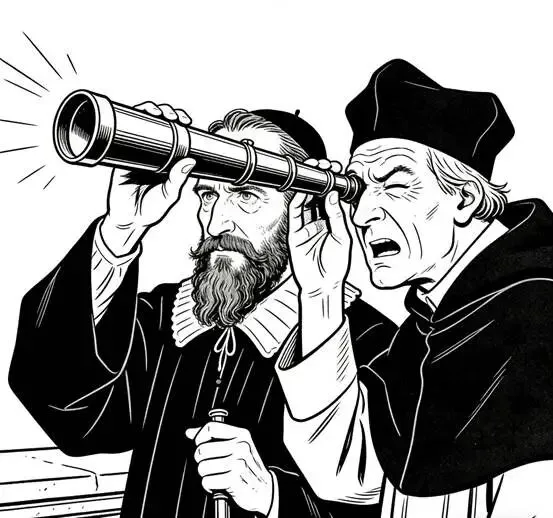
·语法要点:① in his own lifetime 为介词短语作时间状语,置于句首表强调;② the scientific dust 为比喻用法,指 “科学上的纷争”;③ long since 为固定短语,表 “早已”,修饰现在完成时;④ clash with sb 为固定搭配,表 “与……的冲突”;⑤ in something like its proper perspective 为方式状语,表 “以大致正确的视角”。
·释义:伽利略在世时是激烈论战的中心,但是那场科学上的纷争早已平息,时至今日,我们甚至能以大致客观的视角看待他与宗教法庭的那场著名冲突。
·
2. But, in contrast, it is only in modern times that Galileo has become a problem child for historians of science.
·句子类型:简单句(强调句结构)
·核心结构:it is + 被强调部分 (only in modern times) + that + 句子剩余部分 (Galileo has become a problem child...)
·语法要点:① in contrast 为插入语,表 “相比之下”,前后用逗号隔开;②本句为it is...that...强调句型,强调时间状语 only in modern times,去掉 it is that 后句子结构完整;③ a problem child 为比喻,表 “棘手的问题、难题”;④ for historians of science 为介词短语作状语,表 “对科学史家而言”。
·释义:但相比之下,伽利略只是在现代才成了科学史家眼中的一个难题。
·
3. The old view of Galileo was delightfully uncomplicated.
·句子类型:简单句(主系表结构)
·核心结构:主语 (The old view) + 系动词 (was) + 表语 (delightfully uncomplicated)
·语法要点:① of Galileo 为介词短语作后置定语,修饰 The old view;② delightfully 为副词作状语,修饰形容词 uncomplicated,表程度 “令人愉悦地、可喜地”。
·
·释义:过去人们对伽利略的看法简单易懂,这一点令人欣慰。
4. He was, above all, a man who experimented: who despised the prejudice and book learning of the Aristotelians, who put his questions to nature instead of to the ancients, and who drew his conclusions fearlessly.
·句子类型:复合句(主句 + 多个并列的定语从句)
·核心结构:主句 (He was a man...) + 定语从句 1 (who experimented) + 定语从句 2 (who despised...) + 定语从句 3 (who put...) + 定语从句 4 (who drew...)
·语法要点:① above all 为插入语,表 “首先,最重要的是”;②冒号后接三个并列的 who 引导的限制性定语从句,共同修饰先行词 a man,从句间用逗号分隔,最后一个用 and 连接;③ book learning 表 “书本知识,纸上谈兵的学问”;④ instead of 为介词短语,后接介词宾语 the ancients,表 “而非”;⑤ draw conclusions 为固定搭配,表 “得出结论”。
·释义:他首先是一名实验研究者:他蔑视亚里士多德学派的偏见与空洞的书本知识,他向自然而非古人提出问题,并且大胆地得出自己的结论。
·
5. He had been the first to turn a telescope to the sky, and he had seen there evidence enough to overthrow Aristotle and Ptolemy together.
·句子类型:并列复合句(and 连接两个并列的过去完成时分句)
·核心结构:分句 1 (He had been the first to...) + and + 分句 2 (he had seen evidence...)
·语法要点:① the first to do sth 为固定结构,表 “第一个做某事的人”,不定式 to turn... 作后置定语修饰 the first;② turn...to... 表 “把……对准……”;③ there 为地点状语,置于谓语和宾语之间,表 “在那里”;④ enough 为形容词作后置定语,修饰 evidence,表 “足够的”,不定式 to overthrow... 作后置定语,修饰 evidence;⑤ overthrow sb 表 “推翻某人(的理论)”。
·释义:他是第一个将望远镜对准天空的人,并且在那里观察到了足够的证据,足以将亚里士多德和托勒密的理论一同推翻。
·
6. He was the man who climbed the Leaning Tower of Pisa and dropped various weights from the top, who rolled balls down inclined planes, and then generalized the results of his many experiments into the famous law of free fall.
·句子类型:复合句(主句 + 两个并列的定语从句)
·核心结构:主句 (He was the man...) + 定语从句 1 (who climbed...and dropped...) + 定语从句 2 (who rolled...and generalized...)
·语法要点:①两个 who 引导的定语从句修饰先行词 the man,第一个从句含两个并列谓语 climbed 和dropped,第二个从句含两个并列谓语 rolled 和 generalized;② various weights 表 “各种重物”;③ roll...down... 表 “使……沿…… 滚动”;④ generalize...into... 为固定搭配,表 “将……归纳为……”;⑤ of his many experiments 为介词短语作后置定语,修饰 the results;⑥ of free fall 为介词短语作后置定语,修饰 the famous law。
·释义:就是这个人,爬上比萨斜塔从塔顶抛下各种重物,让球体沿斜面向下滚动,而后将自己多次实验的结果归纳成了著名的自由落体定律。
·
7. But a closer study of the evidence, supported by a deeper sense of the period, and particularly by a new consciousness of the philosophical undercurrents in the scientific revolution, has profoundly modified this view of Galileo.
·句子类型:简单句(主谓宾结构)
·核心结构:主语 (a closer study) + 谓语 (has modified) + 宾语 (this view)
·语法要点:① of the evidence 为介词短语作后置定语,修饰 a closer study;② supported by... 为过去分词短语作后置定语,修饰 a closer study,表 “以……为依据”,后接两个并列的 by 短语(by a deeper sense.../by a new consciousness...),由 and particularly 连接,表递进;③ in the scientific revolution 为介词短语作后置定语,修饰 the philosophical undercurrents;④ profoundly 为副词作状语,修饰动词 modified,表程度 “极大地、深刻地”;⑤ this view of Galileo 表 “人们对伽利略的这一看法”。
·释义:但以对那个时代更深入的理解为依据,尤其是以对科学革命中哲学潜流的新认知为支撑,对相关证据的进一步细致研究,极大地改变了人们对伽利略的这一看法。
·
8. Today, although the old Galileo lives on in many popular writings, among historians of science a new and more sophisticated picture has emerged.
·句子类型:复合句(让步状语从句 + 主句)
·核心结构:让步状语从句 (although the old Galileo lives on...) + 主句 (a new picture has emerged)
·语法要点:① although 引导让步状语从句,表 “尽管”,不可与 but 连用;②the old Galileo 表 “人们印象中过去的伽利略”;③ live on 为固定短语,表 “继续存在,流传”;④ in many popular writings 为地点状语,表 “在许多通俗读物中”;⑤ among historians of science 为介词短语作状语,置于句首(主句内)表强调,正常语序为 a new...picture has emerged among historians of science;⑥ sophisticated 表 “复杂的,立体的”,修饰 picture。
·释义:时至今日,尽管那个经典的伽利略形象仍在许多通俗读物中流传,但在科学史家中间,一个全新的、更为立体的伽利略形象已然出现。
·
9. At the same time our sympathy for Galileo's opponents has grown somewhat.
·句子类型:简单句(主谓结构,不及物动词 + 宾语)
·核心结构:主语 (our sympathy) + 谓语 (has grown)
·语法要点:① at the same time 为时间状语,置于句首;② for Galileo's opponents 为介词短语作后置定语,修饰 our sympathy;③ somewhat 为副词作状语,修饰动词 grown,表 “稍微,有所”。
·释义:与此同时,我们对伽利略的反对者也生出了些许同情。
·
10. His telescopic observations are justly immortal; they aroused great interest at the time, they had important theoretical consequences, and they provided a striking demonstration of the potentialities hidden in instruments and apparatus.
·句子类型:并列复合句(分号 + and 连接四个分句,前一个为简单句,后三个为并列简单句)
·核心结构:分句 1 (observations are immortal) + ;+ 分句 2 (they aroused interest) + 分句 3 (they had consequences) + and + 分句 4 (they provided a demonstration)
·语法要点:① telescopic 为形容词作定语,表 “通过望远镜的”;② justly 为副词作状语,修饰 immortal,表 “理所当然地”;③分号连接两个语义相关的句子,后三个分句的主语 they 均指代前文的 His telescopic observations;④ at the time 为时间状语,表 “在当时”;⑤ theoretical consequences 表 “理论意义,理论成果”;⑥ striking 为形容词作定语,表 “显著的,引人注目的”;⑦ hidden in... 为过去分词短语作后置定语,修饰 the potentialities,表 “隐藏在…… 中的”;⑧ instruments and apparatus 表 “仪表和仪器”,apparatus 为不可数名词。
·释义:伽利略通过望远镜完成的观测成果理所当然地名垂青史;这些观测在当时引起了极大的关注,具有重要的理论意义,还充分彰显出了隐藏在各类仪器中的潜在价值。
·
11. But can we blame those who looked and failed to see what Galileo saw, if we remember that to use a telescope at the limit of its powers calls for long experience and intimate familiarity with one's instrument?
·句子类型:复合句(一般疑问句 + 定语从句 + 宾语从句 + 条件状语从句 + 主语从句)
·核心结构:主句 (can we blame those...) + 定语从句 (who looked and failed...) + 条件状语从句 (if we remember that...) + 宾语从句 (that to use...calls for...)
·语法要点:① who 引导限制性定语从句,修饰 those,从句含两个并列谓语 looked 和 failed,failed to do sth 表 “未能做某事”;②定语从句中嵌套 what 引导的宾语从句,作 see 的宾语;③ if 引导条件状语从句,从句中嵌套 that 引导的宾语从句,作 remember 的宾语;④宾语从句中,to use a telescope...为不定式短语作主语,谓语为 calls for;⑤ at the limit of its powers 表 “在其性能极限下”,its 指代 a telescope;⑥ call for 为固定搭配,表 “需要”;⑦ intimate familiarity with sth 表 “对某物的熟知”。
·释义:但如果我们想到,在望远镜的性能极限下使用它,需要长期的经验和对仪器的充分熟知,那我们又怎能指责那些同样观测了天空,却未能看到伽利略所看到的景象的人呢?
·
12. Was the philosopher who refused to look through Galileo's telescope more culpable than those who alleged that the spiral nebulae observed with Lord Rosse's great telescope in the 1840s were scratches left by the grinder?
·句子类型:复合句(特殊一般疑问句 + 两个定语从句 + 宾语从句 + 过去分词作定语)
·核心结构:主句 (Was the philosopher more culpable than those...) + 定语从句 1 (who refused...) + 定语从句 2 (who alleged that...) + 宾语从句 (that the spiral nebulae were scratches...)
·语法要点:① who 引导定语从句修饰 the philosopher,refuse to do sth 表 “拒绝做某事”,look through sth 表 “通过…… 观察”;② than 引导比较状语,后接 those,指代 “那些人”,who引导定语从句修饰 those;③定语从句 2 中嵌套 that 引导的宾语从句,作 alleged 的宾语;④ observed with... 为过去分词短语作后置定语,修饰 the spiral nebulae,表 “用……观测到的”;⑤ in the 1840s 为时间状语,置于定语中;⑥ left by the grinder 为过去分词短语作后置定语,修饰 scratches,表 “由磨镜工留下的”;⑦ culpable 表“应受责备的,有过失的”。
·释义:有位哲学家拒绝通过伽利略的望远镜观测天空,而 19 世纪 40 年代,有人声称用罗斯勋爵的高倍望远镜观测到的螺旋状星云,不过是磨镜工留下的磨痕,难道这位哲学家比这些人更应受到指责吗?
·
13. We can perhaps forgive those who said the moons of Jupiter were produced by Galileo's spyglass if we recall that in his days, as for centuries before, curved glass was the popular contrivance for producing not truth but illusion, untruth.
·句子类型:复合句(主句 + 定语从句 + 条件状语从句 + 宾语从句)
·核心结构:主句 (We can forgive those...) + 定语从句 (who said that...) + 条件状语从句 (if we recall that...) + 宾语从句 (that curved glass was a contrivance...)
·语法要点:① who 引导定语从句修饰 those,从句中省略了 that(引导 said 的宾语从句);②the moons of Jupiter 表 “木星的卫星”;③ be produced by 为被动语态,表 “由……产生(制造)”;④ spyglass 表 “小望远镜”,与前文 telescope 同义;⑤ as for centuries before 为插入语,表 “就像此前的几个世纪一样”;⑥ curved glass 表“曲面镜”;⑦ for producing... 为介词短语作后置定语,修饰 contrivance;⑧ not...but... 为并列结构,表 “不是…… 而是……”,连接 truth 和illusion, untruth。
·释义:如果我们回想一下,在伽利略的时代,就像此前的数百年一样,曲面镜一直是一种常见的器具,它制造的不是真相,而是假象与谬误,那我们或许就能原谅那些声称木星的卫星是伽利略用他的小望远镜造出来的人了。
·
14. And if a single curved glass would distort nature, how much more would a pair of them?
·句子类型:复合句(条件状语从句 + 特殊疑问句,省略结构)
·核心结构:条件状语从句 (if a single curved glass would distort nature) + 主句 (how much more would a pair of them?)
·语法要点:① and 承接上文,表递进;②distort nature 表 “歪曲自然,扭曲客观事实”;③主句为省略句,完整形式为how much more would a pair of them distort nature?,为避免重复,省略了谓语和宾语 distort nature;④ a pair of them 表 “两片曲面镜”,them 指代 curved glass。
·释义:更何况,一片曲面镜就足以歪曲客观事实,那两片曲面镜的歪曲程度又会严重多少呢?
·
词汇:
一、核心词汇
1.controversy /ˈkɒntrəvɜːsi/n. 争论,论战;争议
搭配:violent controversy 激烈的论战
2.dust /dʌst/n. 灰尘;(喻)纷争,风波
搭配:scientific dust 科学上的纷争
3.settle /ˈsetl/v. 平息,解决;定居
搭配:dust has settled 纷争平息
4.clash /klæʃ/n. 冲突,争执;碰撞 v. 冲突
搭配:clash with sb 与某人的冲突
5.Inquisition /ˌɪnkwɪˈzɪʃn/n. (历史)宗教法庭(专有名词,首字母大写)
6.perspective /pəˈspektɪv/n. 视角,观点;远景
搭配:proper perspective 正确的视角
7.historian /hɪˈstɔːriən/n. 历史学家
搭配:historians of science 科学史家
8.uncomplicated /ʌnˈkɒmplɪkeɪtɪd/adj. 简单的,易懂的
9.experiment /ɪkˈsperɪment/v. 做实验 /ɪkˈsperɪmənt/n. 实验
搭配:a man who experimented 实验研究者
10.despise /dɪˈspaɪz/v. 蔑视,鄙视
11.prejudice /ˈpredʒudɪs/n. 偏见,成见
12.Aristotelian /ˌærɪstəˈtiːliən/n. 亚里士多德学派的人 adj. 亚里士多德的
13.generalize /ˈdʒenrəlaɪz/v. 归纳,概括;推广
搭配:generalize the results 归纳结果
14.evidence /ˈevɪdəns/n. 证据,证明(不可数)
搭配:a closer study of the evidence 对证据的深入研究
15.profoundly /prəˈfaʊndli/adv. 极大地;深刻地
搭配:profoundly modify 极大地改变
16.modify /ˈmɒdɪfaɪ/v. 改变,修改;修饰
17.sophisticated /səˈfɪstɪkeɪtɪd/adj. 复杂的;立体的;精通的
搭配:a sophisticated picture 立体的形象
18.sympathy /ˈsɪmpəθi/n. 同情;同感
搭配:sympathy for sb 对某人的同情
19.opponent /əˈpəʊnənt/n. 反对者;对手
20.telescopic /ˌtelɪˈskɒpɪk/adj. 通过望远镜的;望远镜的
搭配:telescopic observations 望远镜观测
21.immortal /ɪˈmɔːtl/adj. 不朽的;永恒的 n. 不朽的人
22.theoretical /ˌθɪəˈretɪkl/adj. 理论的;理论上的
搭配:theoretical consequences 理论意义
23.demonstration /ˌdemənˈstreɪʃn/n. 证明;展示;示威
搭配:striking demonstration 显著的展示
24.potentiality /pəˌtenʃiˈæləti/n. 潜力,潜能(复数 potentialities)
25.instrument /ˈɪnstrəmənt/n. 仪器,器具;乐器
搭配:scientific instrument 科学仪器
26.apparatus /ˌæpəˈreɪtəs/n. 仪器,设备(不可数)
27.blame /bleɪm/v. 指责,责备 n. 责任
搭配:blame sb 指责某人
28.culpable /ˈkʌlpəbl/adj. 应受责备的,有过失的
29.allege /əˈledʒ/v. 声称,断言;指控
30.spiral /ˈspaɪrəl/adj. 螺旋状的 n. 螺旋 v. 螺旋上升
搭配:spiral nebulae 螺旋状星云
31.nebula /ˈnebjələ/n. 星云(复数 nebulae/nebulas)
32.scratch /skrætʃ/n. 划痕,刮痕 v. 刮擦
搭配:scratches left by the grinder 磨镜工留下的划痕
33.grinder /ˈɡraɪndə/n. 磨工;磨床
34.forgive /fəˈɡɪv/v. 原谅,宽恕(过去式 forgave,过去分词 forgiven)
35.Jupiter /ˈdʒuːpɪtə/n. 木星(专有名词)
搭配:moons of Jupiter 木星的卫星
36.spyglass /ˈspaɪɡlɑːs/n. 小望远镜,单筒望远镜
37.curved /kɜːvd/adj. 弯曲的,曲面的
搭配:curved glass 曲面镜
38.contrivance /kənˈtraɪvəns/n. 器具;发明;计谋
39.illusion /ɪˈluːʒn/n. 假象,错觉;幻想
40.distort /dɪˈstɔːt/v. 歪曲,扭曲;使变形
搭配:distort nature 歪曲客观事实
二、高级固定搭配
1.in one's lifetime在某人的一生中
用法:时间状语,置于句首 / 句中,可替换为 during one's lifetime
2.the centre of …… 的中心;…… 的核心
用法:后接抽象 / 具体名词,表 “某个事件 / 场所的核心主体”
3.long since早已,许久以来
用法:修饰完成时,置于谓语前,表 “动作早已发生”
4.in proper perspective以正确的视角;客观地
用法:方式状语,可替换为 in the right perspective,拓展out of perspective(视角失真)
5.in contrast相比之下,与此相反
用法:插入语,前后用逗号隔开,表转折对比
6.above all首先,最重要的是
用法:插入语,用于强调核心观点,置于句中 / 句首
7.book learning书本知识,纸上谈兵的学问
用法:不可数名词短语,表贬义,与 “实践经验” 形成对比
8.put questions to向…… 提出问题
用法:后接人 / 事物,替换普通表达ask questions to,更正式
9.instead of而不是,而非
用法:后接名词 / 代词 / 动名词,表取舍对比
10.draw conclusions得出结论
用法:主谓宾搭配,拓展draw a conclusion from(从…… 得出结论)
11.turn...to...把…… 对准……;将…… 转向……
用法:后接具体事物,本课表 “将望远镜对准天空”,可拓展抽象义turn one's attention to(将注意力转向)
12.enough to do sth足够…… 去做某事
用法:形容词 / 副词 + enough,后置修饰,后接不定式表结果
13.overthrow sb/sth推翻某人 / 某物(的理论 / 统治)
用法:及物动词短语,课文表 “推翻科学理论”
14.roll...down...使…… 沿…… 滚动
用法:接具体名词,表 “使物体沿斜面 / 平面滚动”
15.generalize...into...将…… 归纳为……
用法:表 “从具体实验 / 现象归纳出理论 / 规律”,写作高频
16.the law of free fall自由落体定律
用法:专有科学名词,the law of...为固定结构(…… 定律)
17.supported by以…… 为依据;由…… 支撑
用法:过去分词短语作后置定语,表被动支撑 / 依据
18.a sense of一种…… 的意识 / 理解
用法:后接抽象名词,本课a deeper sense of the period(对时代的深入理解)
19.philosophical undercurrents哲学潜流
用法:抽象名词搭配,表 “某一领域背后隐含的哲学思想”
20.the scientific revolution科学革命(专有名词)
21.live on继续存在,流传;靠…… 生活
用法:本课取 “形象 / 观点继续流传” 义,为不及物短语
22.popular writings通俗读物,大众读物
用法:与academic writings(学术著作)形成对比
23.at the same time与此同时
用法:时间状语,表并列动作 / 状态
24.grow somewhat有所增长 / 加深
用法:somewhat 修饰动词,表 “程度轻微的变化”
25.at the time在当时,那时
用法:时间状语,表 “过去某个特定时期”
26.hidden in隐藏在…… 中的
用法:过去分词短语作后置定语,表 “被动隐藏”
27.at the limit of在…… 的极限下;在…… 的边缘
用法:后接名词,表 “性能 / 能力 / 范围的极限”
28.call for需要,要求;呼吁
用法:及物动词短语,本课表 “需要经验 / 能力”,正式表达
29.intimate familiarity with对…… 的熟知,对…… 的深入了解
用法:后接事物,替换普通表达be familiar with,更书面化
30.look through透过…… 观察;浏览,翻阅
用法:本课取 “通过望远镜 / 玻璃观察” 义,为固定短语
31.fail to do sth未能做某事,没能做某事
用法:表否定结果,正式书面语,替换普通表达can't do sth
32.more...than...比…… 更……
用法:比较级结构,可接形容词 / 副词,表程度对比
33.in the 1840s在 19 世纪 40 年代
用法:年代表达,in the + 整十数 + s
34.be produced by由…… 产生 / 制造
用法:被动语态,表 “某物由某工具 / 人制造”
35.as for centuries before就像此前的几个世纪一样
用法:插入语,表 “时间上的延续性对比”
36.for producing用于制造 / 产生……
用法:介词 for 后接动名词,表 “工具 / 器具的用途”
37.not...but...不是…… 而是……
用法:并列结构,连接名词 / 形容词 / 动名词,表取舍
38.a single一个,一片(强调 “数量唯一”)
用法:后接可数名词单数,表强调,比a更具语气
39.a pair of一双,一对;两片
用法:后接可数名词复数,本课表 “两片曲面镜”
三、拓展高频搭配
(一)科学实验 / 研究类
1.scientific research科学研究
2.experimental results实验结果
3.scientific instrument科学仪器
4.make observations进行观测
5.verify a theory验证一个理论
6.scientific discovery科学发现
7.empirical evidence实证证据
8.scientific revolution科学革命
9.law of nature自然定律
10.experimental method实验方法
(二)视角 / 观点类
1.from a historical perspective从历史的视角
2.objective view客观的观点
3.traditional view传统的看法
4.a new picture of对…… 的全新认识
5.in one's eyes在某人看来
6.change one's view of改变对…… 的看法
7.hold a prejudice against对…… 抱有偏见
(三)人物 / 冲突类
1.scientific giant科学巨匠
2.oppose a theory反对一种理论
3.violent debate激烈的辩论
4.conflict between science and religion科学与宗教的冲突
5.academic opponent学术对手
6.gain sympathy from从…… 获得同情
7.be to blame for对…… 负有责任
(四)天文 / 仪器类
1.telescope observation望远镜观测
2.celestial body天体
3.solar system太阳系
4.spiral galaxy螺旋星系(拓展 nebula 星云)
5.optical instrument光学仪器
6.instrument performance仪器性能
7.curved mirror曲面镜(拓展 curved glass 曲面镜)
句型:
句式 1
原句:In his own lifetime he was the centre of violent controversy, but the dust has long since settled, and today we can see even his famous clash with authority in something like its proper perspective.
套用结构:In one's own lifetime sb was the centre of violent controversy, but the dust has long since settled, and today we can see even his famous clash with ______ in something like its proper perspective.
替换关键词:authority(权威)/mainstream ideas(主流思想)/traditional theories(传统理论)/the public(大众)
适用场景:评价历史人物、争议性人物的功过与历史定位
句式 2
原句:But a closer study of the evidence, supported by a deeper sense of the period, has profoundly modified this traditional view of him.
套用结构:But a closer study of ______, supported by a deeper sense of ______, has profoundly modified this traditional view of ______.
替换关键词:
①第一个空:the facts(事实)/the data(数据)/the historical records(历史记载)
②第二个空:the background(时代背景)/the social context(社会环境)/the subject(研究主题)
③第三个空:the event(该事件)/the phenomenon(该现象)/the theory(该理论)
适用场景:论证 “新研究 / 新证据改变传统观点”,用于观点反驳、认知升级类论述
句式 3
原句:Today, although the old image of him lives on in many popular writings, among professionals a new and more sophisticated picture has emerged.
套用结构:Today, although the old image of ______ lives on in many popular writings, among ______ a new and more sophisticated picture has emerged.
替换关键词:
①第一个空:this phenomenon(该现象)/this theory(该理论)/this figure(该人物)
②第二个空:scholars(学者)/researchers(研究者)/experts in the field(该领域专家)
适用场景:对比大众认知与专业认知的差异,突出 “专业视角的新认知”
句式 4
原句:But can we blame those who tried but failed to see what he saw, if we remember that to do sth at the limit of its powers calls for long experience and intimate familiarity with it?
套用结构:But can we blame those who tried but failed to ______, if we remember that to ______ calls for long experience and intimate familiarity with ______?
替换关键词:
①第一个空:understand the truth(认清真相)/grasp the core idea(理解核心思想)/achieve the goal(达成目标)
②第二个空:master this skill(掌握这项技能)/use this method(运用这种方法)/study this subject deeply(深入研究该学科)
③第三个空:the skill(该技能)/the method(该方法)/the subject(该学科)
适用场景:为某类 “尝试但失败的人” 辩解,论证 “失败并非源于能力不足,而是客观条件 / 经验要求限制”
句式 5
原句:If we recall that in that age, as for centuries before, sth was the popular contrivance for producing not truth but illusion, we can perhaps forgive those who said the truth was produced by his tool.
套用结构:If we recall that in that age, as for ______ before, sth was the popular way for producing not ______ but ______, we can perhaps forgive those who said ______.
替换关键词:
①第一个空:decades(数十年)/ages(数代)/centuries(数百年)
②第二个空:reality(真相)/fact(事实)/essence(本质)
③第三个空:falsehood(谬误)/misunderstanding(误解)/superficial appearance(表面现象)
④第四个空:the truth was a hoax(真相是一场骗局)/the achievement was an accident(这项成就只是偶然)/the discovery was fake(该发现是虚假的)
适用场景:结合时代背景为 “质疑真理 / 新发现的人” 辩解,论证 “认知局限源于时代背景”
 10个月宝宝每天需要喝多少奶粉?

