在深度学习的过程中有时需要用到PyTorch进行线性代数的一些操作,以下总结了一些方法import torchx = torch.tensor([3.0])y = torch.tensor([2.0])x + y, x * y, x / y, x**y# (tensor([5.]), tensor([6.]), tensor([1.5000]), tensor([9.]))
x = torch.arange(4)x# tensor([0, 1, 2, 3])
通过指定两个分量m和 n来创建一个形状为m×n的矩阵A = torch.arange(20).reshape(5, 4)A"""tensor([[ 0, 1, 2, 3], [ 4, 5, 6, 7], [ 8, 9, 10, 11], [12, 13, 14, 15], [16, 17, 18, 19]])"""
A.T"""tensor([[ 0, 4, 8, 12, 16], [ 1, 5, 9, 13, 17], [ 2, 6, 10, 14, 18], [ 3, 7, 11, 15, 19]])"""
对称矩阵(symmetric matrix)A等于其转置:A=A⊤B = torch.tensor([[1, 2, 3], [2, 0, 4], [3, 4, 5]])B"""tensor([[1, 2, 3], [2, 0, 4], [3, 4, 5]])"""B == B.T"""tensor([[True, True, True], [True, True, True], [True, True, True]])"""
就像向量是标量的推广,矩阵是向量的推广一样,可以构建具有更多轴的数据结构X = torch.arange(24).reshape(2, 3, 4)X"""tensor([[[ 0, 1, 2, 3], [ 4, 5, 6, 7], [ 8, 9, 10, 11]], [[12, 13, 14, 15], [16, 17, 18, 19], [20, 21, 22, 23]]])"""
给定具有相同形状的任意两个张量,任何按元素二元运算的结果都将是相同形状的张量A = torch.arange(20, dtype=torch.float32).reshape(5, 4)B = A.clone()A, A + B"""(tensor([[ 0., 1., 2., 3.], [ 4., 5., 6., 7.], [ 8., 9., 10., 11.], [12., 13., 14., 15.], [16., 17., 18., 19.]]), tensor([[ 0., 2., 4., 6.], [ 8., 10., 12., 14.], [16., 18., 20., 22.], [24., 26., 28., 30.], [32., 34., 36., 38.]]))"""
两个矩阵的按元素乘法称为哈达玛积(Hadamard product)(数学符号⊙)A * B"""tensor([[ 0., 1., 4., 9.], [ 16., 25., 36., 49.], [ 64., 81., 100., 121.], [144., 169., 196., 225.], [256., 289., 324., 361.]])"""a = 2X = torch.arange(24).reshape(2, 3, 4)a + X, (a * X).shape"""(tensor([[[ 2, 3, 4, 5], [ 6, 7, 8, 9], [10, 11, 12, 13]], [[14, 15, 16, 17], [18, 19, 20, 21], [22, 23, 24, 25]]]), torch.Size([2, 3, 4]))"""
x = torch.arange(4, dtype=torch.float32)x, x.sum()# (tensor([0., 1., 2., 3.]), tensor(6.))
A.shape, A.sum()# (torch.Size([5, 4]), tensor(190.))
A_sum_axis0 = A.sum(axis=0)A_sum_axis0, A_sum_axis0.shape# (tensor([40., 45., 50., 55.]), torch.Size([4]))A_sum_axis1 = A.sum(axis=1)A_sum_axis1, A_sum_axis1.shape# (tensor([ 6., 22., 38., 54., 70.]), torch.Size([5]))A.sum(axis=[0, 1])# tensor(190.)
一个与求和相关的量是平均值(mean或average)A.mean(), A.sum() / A.numel()# (tensor(9.5000), tensor(9.5000))A.mean(axis=0), A.sum(axis=0) / A.shape[0]# (tensor([ 8., 9., 10., 11.]), tensor([ 8., 9., 10., 11.]))
sum_A = A.sum(axis=1, keepdims=True)sum_A"""tensor([[ 6.], [22.], [38.], [54.], [70.]])"""
A / sum_A"""tensor([[0.0000, 0.1667, 0.3333, 0.5000], [0.1818, 0.2273, 0.2727, 0.3182], [0.2105, 0.2368, 0.2632, 0.2895], [0.2222, 0.2407, 0.2593, 0.2778], [0.2286, 0.2429, 0.2571, 0.2714]])"""
A.cumsum(axis=0)"""tensor([[ 0., 1., 2., 3.], [ 4., 6., 8., 10.], [12., 15., 18., 21.], [24., 28., 32., 36.], [40., 45., 50., 55.]])"""
y = torch.ones(4, dtype=torch.float32)x, y, torch.dot(x, y)# (tensor([0., 1., 2., 3.]), tensor([1., 1., 1., 1.]), tensor(6.))
可以通过执行按元素乘法,然后进行求和来表示两个向量的点积torch.sum(x * y)# tensor(6.)
矩阵向量积Ax是一个长度为m的列向量,其第i个元素是点积a⊤ixA.shape, x.shape, torch.mv(A, x)# (torch.Size([5, 4]), torch.Size([4]), tensor([ 14., 38., 62., 86., 110.]))
可以将矩阵-矩阵乘法AB看作是简单地执行m次矩阵-向量积,并将结果拼接在一起,形成一个n×m矩阵B = torch.ones(4, 3)torch.mm(A, B)"""tensor([[ 6., 6., 6.], [22., 22., 22.], [38., 38., 38.], [54., 54., 54.], [70., 70., 70.]])"""
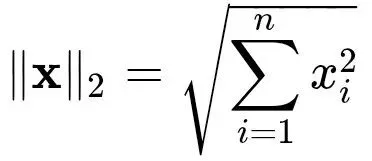
u = torch.tensor([3.0, -4.0])torch.norm(u)# tensor(5.)
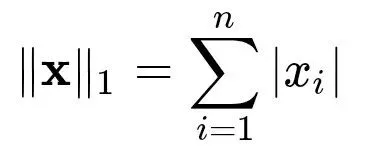
torch.abs(u).sum()# tensor(7.)
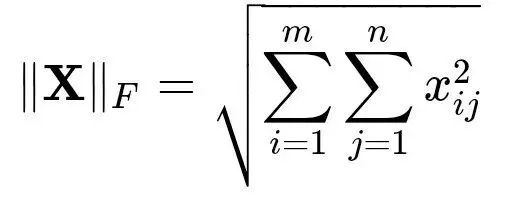
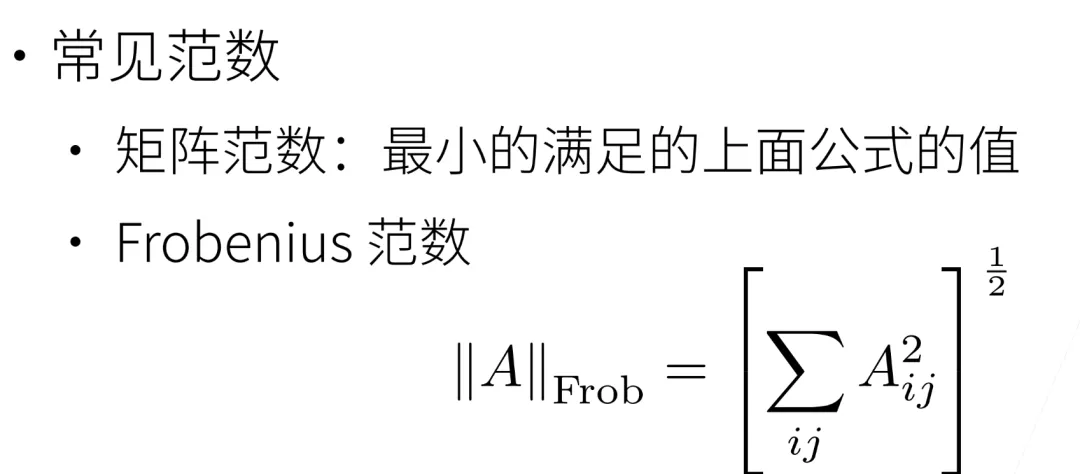
矩阵的弗罗贝尼乌斯范数(Frobenius norm)是矩阵元素平方和的平方根:torch.norm(torch.ones((4, 9)))# tensor(6.)
范数(Norm):范数是数学中的一个基本概念,主要用于度量向量空间或矩阵中每个向量的长度或大小。