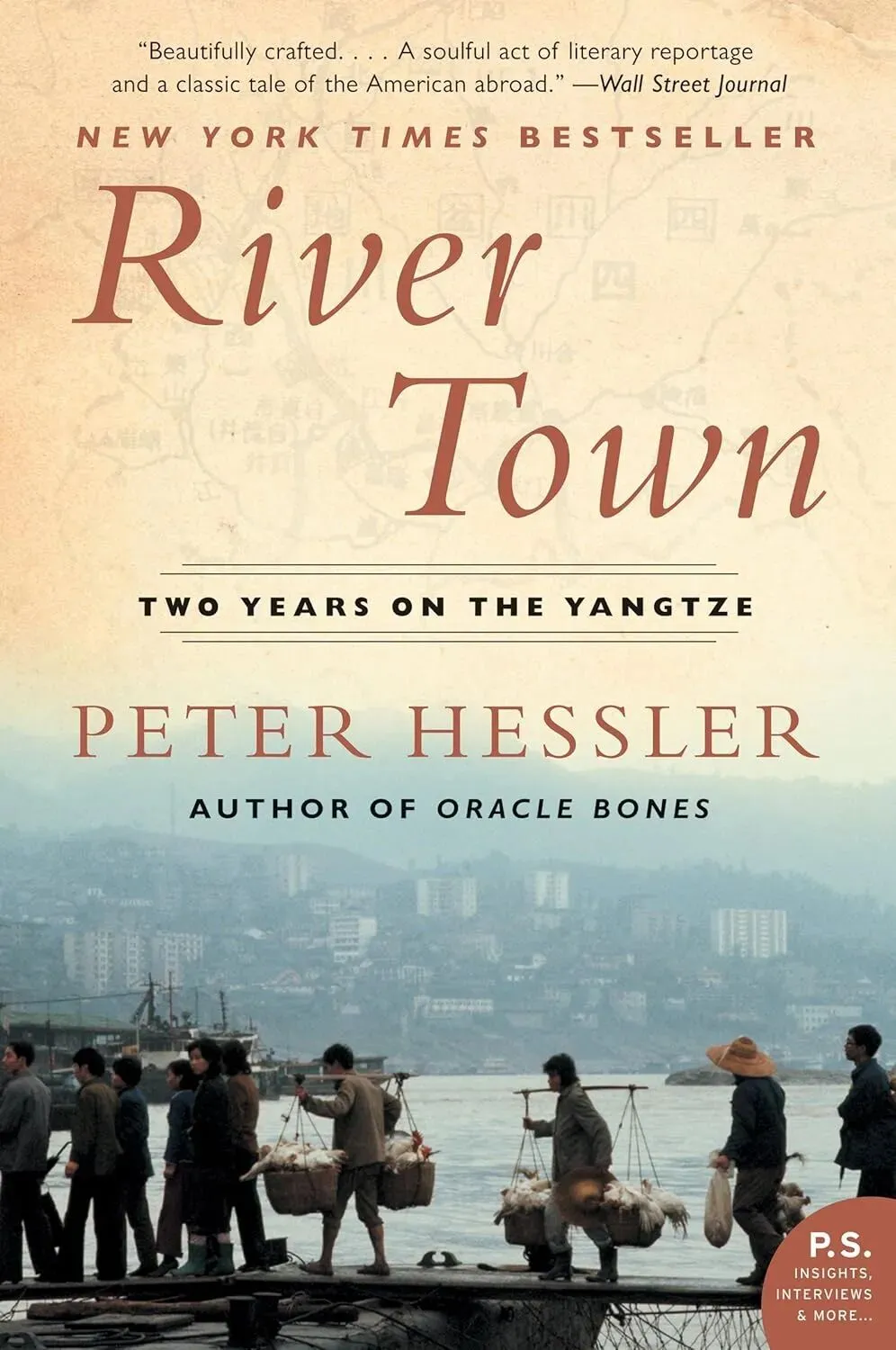
River Town:Two Years on the Yangtze
(中译名《江城》)
By Peter Hessler
Peter Hessler在涪陵师专英语系的教师生涯,也产生了很多有趣的故事和感悟。很喜欢书中关于教莎士比亚诗歌的部分,仿佛又回到了大学的课堂。
1.「教诗歌的好方法」
The first poem we studied was Shakespeare’ s, and I didn’t make it particularly easy. I defined the form of a Shakespearean sonnet and gave them Sonnet Eighteen in pieces, broken apart line by line. We reviewed poetic terms and archaic language, and I divided them into groups and told them to put the poem in order. Even though I gave them the first line, I figured it was an impossible task; my goal was simply to make them struggle with the bare bones of the poem until its form felt somewhat familiar.
作者用了一个非常好玩的教学方法来教授英语诗歌:先讲解莎士比亚十四行诗的格律,再把诗行打乱,让学生通过学到的规则来重新给诗行排序,这个过程中不仅让学生熟悉了十四行诗的形式特点,还促使学生主动思考内容的关系,一举两得。
2.「如何让自己永世长存?找一个会写诗的朋友」
Sonnet 18
Shall I Compare Thee to a Summer's Day?
by William Shakespeare
Shall I compare thee to a summer's day?
我能否将你比作夏日?
Thou art more lovely and more temperate:
你却比夏天更可爱,也更温婉:
Rough winds do shake the darling buds of May,
狂风会吹落五月娇蕾,
And summer's lease hath all too short a date:
夏季的时日又太过短暂:
Sometime too hot the eye of heaven shines,
苍天的巨眼有时照得太灼热,
And often is his gold complexion dimm'd;
他的金颜也常被阴云遮蔽;
And every fair from fair sometime declines,
万般美色终会渐渐凋零,
By chance or nature's changing course untrimm'd;
因机缘或自然代谢而褪色;
But thy eternal summer shall not fade
但你永恒的夏日永不消逝,
Nor lose possession of that fair thou owest;
你也不会失去你拥有的美;
Nor shall Death brag thou wander'st in his shade,
死神也不能夸口你在他影里徘徊,
When in eternal lines to time thou growest:
因你在不朽的诗行里与时间同长:
So long as men can breathe or eyes can see,
只要人类尚能呼吸,眼睛尚能看见,
So long lives this, and this gives life to thee.
这首诗就将长存,并赋予你生命。
Shall I Compare Thee to a Summer's Day 是莎翁经典的十四行诗,最后两行对句是全诗的灵魂:时间会夺走一切美,唯独爱人的美不会消失,因为只要人类尚能呼吸,眼睛尚能看见,爱人的美就会随这首诗永生。
A color lithograph of William Shakespeare from 1853
(图片来源:https://www.biography.com/authors-writers/william-shakespeare)
真正的永生,是被一段文字永远记住。莎士比亚没有给爱人名字,却用文字,给了她永恒。中国也有类似的例子。北宋元丰七年,苏轼即将离开黄州前夕,在为他饯行的宴会上,即兴为黄州官妓李琪作诗,传为美谈,李琪也因此名留后世。
赠李琪
苏 轼
东坡五载黄州住,何事无言及李琪?
恰似西川杜工部,海棠虽好不吟诗。
杜甫都写不出海棠花的美,你的美貌我又怎能轻易下笔呢?苏轼与莎翁,相隔500年,却在文字中相遇,让普通人在诗中不朽。
所以,如何让自己永世长存?去找一个会写诗的朋友吧。
As time went on it almost depressed me…How many Americans could recite a poem, or identify its rhythm? Every one of my Fuling students could recite at least a dozen Chinese classics by heart—the verses of Du Fu, of Li Bai, of Qu Yuan—and these were young men and women from the countryside of Sichuan province, a backwater by Chinese standards. They still read books and they still read poetry; that was the difference.
为什么喜欢这本书呢?我想就是这种作为旁观者,看其他旁观者观察我们自己的奇妙感受:我在观察作者,作者在观察我们,从作者的眼睛里,我看到了不一样的自己的倒影。曾经学英语诗歌时,总觉得晦涩难懂,却没有仔细思考过,为什么同样古风浓郁的中国古诗却能自然地融入到普通人的普通生活中,并非高不可攀。看到作者的描述才突然恍然大悟,哦,原来甚至在还不识字时,李白、杜甫这些大诗人的声音,就已经刻在我们的血液里了。That was the difference.
3.「中国风的莎士比亚」
Peter Hessler为学生讲解诗歌如何让人永恒,这段师生的互动和作者对此的思考也很有启发:
“Four centuries ago, Shakespeare loved a woman and wrote a poem about her. He said he would make her beauty live forever—that was his promise. Today the year is 1996, and we are in China, in Sichuan, next to the Yangtze River. Shakespeare never came to Fuling. None of you has ever been to England, and you have not seen the woman that Shakespeare loved four hundred years ago. But right now every one of you is thinking about her.”
There was absolute silence. Usually Fuling was a riot of horns and construction projects, but at that moment in that classroom it was completely quiet. There was respect and awe in that silence, and I shared it. I had read the poem countless times, but I had never heard it truly until I stood in front of my class in Fuling and listened to their stillness as they considered the miracle of those fourteen lines.
A moment later I asked them to describe what they saw in that silence, Shakespeare’s woman through Chinese eyes:
“Her mouth is like a red cherry.”
“Her eyebrow is like the leaves of willow.”
“Her skin is white and soft, like cooked fat.”
“Her fingers are so slender that scallions can’t compare with them.”
There was an intensity and a freshness to their readings that I’d never seen before from any other students of literature, and partly it was a matter of studying foreign material. We were exchanging clichés without knowing it: I had no idea that classical Chinese poetry routinely makes scallions of women’ s fingers, and they had no idea that Sonnet Eighteen’ s poetic immortality had been reviewed so many times that it nearly died, a poem with a number tagged to its toe. Our exchange suddenly made everything new: there were no dull poems, no overworked plays, no characters who had already been discussed to the point of clinicism.
“樱桃嘴”,“柳叶眉”,“肤若凝脂”,“指若青葱”……在中国学生的眼里,莎士比亚诗中的美人似乎也一身汉服打扮,一颦一笑不输昭君玉环。
当我们在学习外国的材料、或者借由外语来彼此交流时,我们正在互换各自的“陈词滥调”。那些我们习以为常的意象,在对方眼里就变成了“异域风情”。这种交换让彼此的文化都重新焕发了光彩。
4.「样板“外国人”」
Much of what I learned in the early days was from the students. My Chinese wasn’t yet good enough to talk with the people in town, which made the city overwhelming—a mess of miscommunication. And so I listened to my students, reading what they wrote in their journals for class, and parts of Fuling slowly began to draw into focus.
非常有意思的一段经历:作者的汉语水平不足以和本地人沟通,本地人又不懂外语,所以这些正在学习英语的本地大学生们就成了架构信息的桥梁。
Students wrote about the way I always carried a water bottle to class; they wrote about how I paced the classroom as I taught; they wrote about my laugh, which they found ridiculous. They wrote about my foreign nose, which impressed them as impossibly long and straight, and many of them wrote about my blue eyes. This was perhaps the strangest detail of all, because my eyes are hazel—but my students had read that foreigners had blue eyes, and they saw what they wanted to see.
Mostly they wanted to see all of the outside world condensed into these two young waiguoren, which was what foreigners were called in Fuling—“people from outside the country.”
从学生们的作文里,作者了解了学生眼中“外国人”应该有的样子。在1996年的中国,在涪陵这样的小城,空降这里的两个“真实”的外国人,成为了有趣的人类样本,成为了学生们了解世界的一扇小窗。但同时,they saw what they wanted to see, 在学生眼里,Peter和Adam就是“样板外国人”该有的样子:高鼻梁、蓝眼睛、T恤衫、棒球帽。如果这个外国人不是蓝眼睛,那一定是这个人错了。
作者在下文提到了文学不应该用于政治宣传,也不应该强行套入各种晦涩的文学批评的理论:
It’ s natural to want Shakespeare on your side—and if he doesn’t fit perfectly, you can twist his words to serve your purpose. Or, if he absolutely refuses to come to heel, you can expel him from the canon.
不管莎士比亚的眼睛是什么颜色的,只要需要,他的眼睛就可以是蓝色的。
作为教师的作者,着迷于学生在读文学作品时单纯而自然的情感,不必与政治牵连,无需与种族挂钩,单纯地喜欢或不喜欢文学作品中的人物,仅此而已。文学会在必要的时刻,自己展现出她的韵味悠长。
You couldn’t have said something like that at Oxford. You couldn’t simply say: I don’t like Hamlet because I think he’ s a lousy person. Everything had to be more clever than that; you had to recognize Hamlet as a character in a text, and then you had to dismantle it accordingly, layer by layer, not just the play itself but everything that had ever been written about it. You had to consider what all the other critics had said, and the accumulated weight of their knowledge and nonsense sat heavily on the play. You had to think about how the play tied in with current events and trends. This process had some value, of course, but for many readers it seemed to have reached the point where there wasn’t even a split-second break before the sophistication started.
... As a student, that was all I had wanted—a brief moment when a simple and true thought flashed across the mind: I don’t like this character. This is a good story. The woman in this poem is beautiful and I bet her fingers are slim like scallions.
若干年前,在英美文学的课堂上,我也有过同样的感受。是应该简单直接地跟随故事的主人公感受爱恨情仇?还是应该抽丝剥茧地依照文学评论理论的框架把作品打碎再重铸?究竟我自己的解读是权威?还是拉康、柏拉图、弗洛伊德才是正解?现在想来,世界上哪有那么多的单选题?不同的心境下,哪个选项都是正确答案。想要简单的生活,就去简单地感受,当个天真无邪的小朋友;想要复杂的人生,就去复杂地思考,成为悲天悯人的悉达多,都无不可。